What is Context-Aware Computing? - AI Encyclopedia
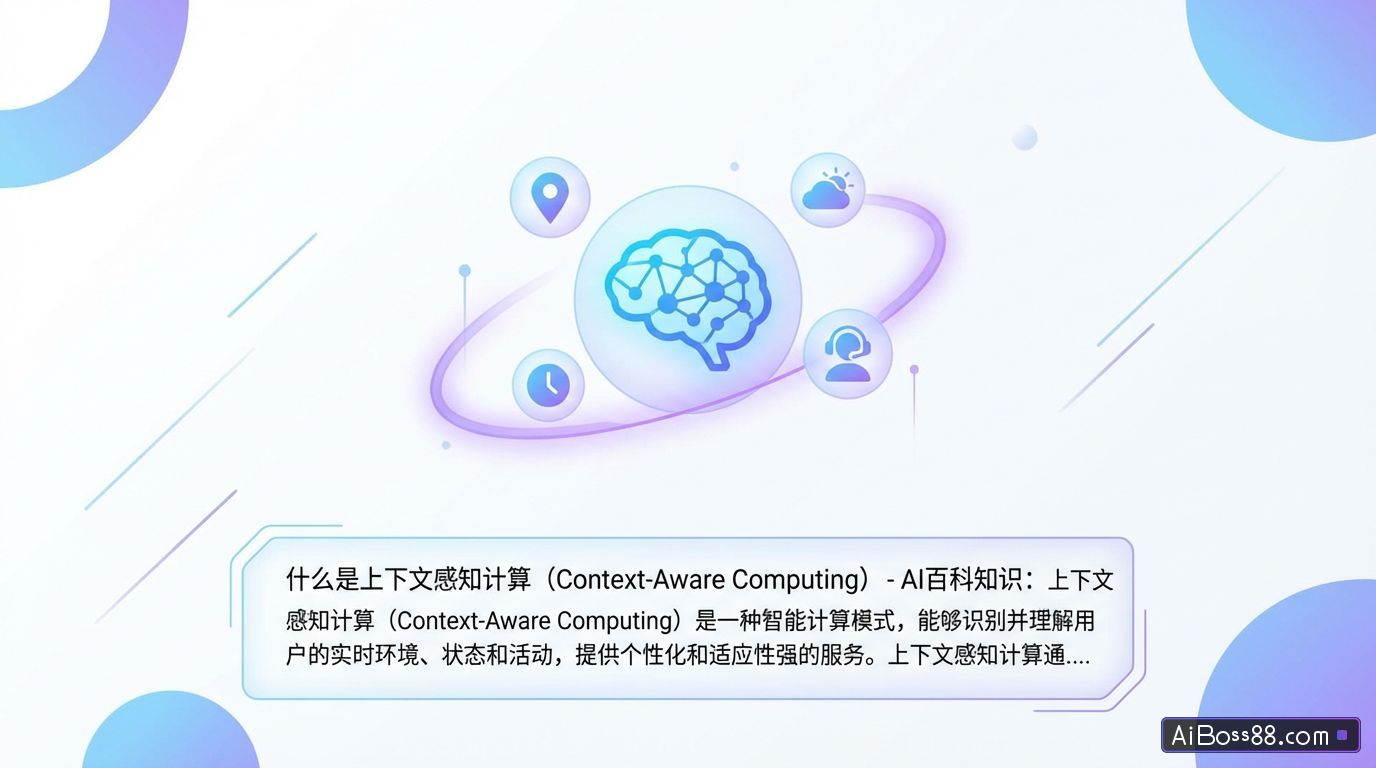
Context-aware computing is an intelligent computing paradigm that can identify and understand a user's real-time environment, state, and activities, providing personalized and highly adaptive services. Context-aware computing...
The digital age has become an integral part of our daily lives. Context-aware computing, as...intelligentThe forefront of technology is leading this transformation. By understanding and anticipating user needs, personalized services are provided, making devices and applications more...intelligentAnd highly responsive. This article will delve into the core concepts, application scenarios, and future development of this technology, revealing how context-aware computing is shaping how we interact with technology.
What is context-aware computing?
Context-Aware Computing is a type of...intelligentContext-aware computing can identify and understand a user's real-time environment, state, and activities, providing personalized and adaptive services. By analyzing contextual information such as the user's location, time, activity, and device status, context-aware computing enables devices and services to...intelligentResponding to user needs and optimizing user experience.intelligentHome, mobile devices,recommendIt has wide applications in systems and other fields.
How Context-Aware Computing Works
Context-aware computing works by capturing and analyzing user environment and state information in real time. This is achieved through the integration of sensors, data collection, and...intelligentAlgorithms identify contextual information such as a user's location, time, and activity patterns. This information is used to understand the user's current needs and preferences, thereby providing customized services and responses.intelligentMobile phones can use user location informationautomaticrecommendNearby restaurants or adjust screen brightness to suit ambient light.
Context-aware computing also involves processing the collected data.intelligentThe system processes data to identify patterns and trends. It learns user behavior, predicts potential needs, and proactively offers assistance when appropriate. This computational model enhances the user experience and strengthens the service.intelligentHuaheautomaticThis will improve the level of technological sophistication, enabling technology to be more seamlessly integrated into people's daily lives.
Main applications of context-aware computing
The main application areas of context-aware computing include:
- intelligentHomeBy sensing changes in residents' behavior and the environment,intelligentHome systems canautomaticAdjust lighting, temperature, and security systems to improve living comfort and energy efficiency.
- mobile device:intelligentSmartphones and wearable devices utilize context-aware technology to adjust settings based on the user's location, time, or activity patterns, such as...automaticMuterecommendRoute or health tracking.
- recommendsystemE-commerce platforms and content providers offer personalized products or content by analyzing users' browsing history, search habits, and real-time context.recommend.
- Health and Medical Care:intelligentHealth monitoring devices can track patients' physiological parameters and activity data in real time, providing doctors with more accurate diagnostic information or reminding patients to take their medication.
- intelligenttransportation:automaticUsing context-aware technology, drivers can analyze road conditions, weather, and the status of surrounding vehicles in real time to make safe driving decisions.
- Tourism servicesTravel apps can provide customized travel routes and attractions based on the user's location, preferences, and travel history.recommendInformation on local cultural events.
- Educational Technology:intelligentThe education platform analyzes students' learning habits and progress to provide personalized learning resources and tutoring, adapting to the learning needs of different students.
- Officeautomaticchange:intelligentThe office system can be tailored to employees' work patterns and schedules.automaticAdjust meeting room bookings, schedule reminders, and document management.
- Security monitoringSecurity systems enhance the safety of public places and private residences by detecting abnormal behavior or environmental changes and issuing timely alerts.
- RetailRetailers use context-aware technologies to analyze customer shopping behavior, optimize inventory management, and provide personalized shopping experiences and promotions.
Challenges of Context-Aware Computing
While context-aware computing has enormous potential and broad application prospects, it also faces some challenges:
- Privacy and security issuesWith the increasing collection and analysis of user data, protecting user privacy and data security has become a critical issue. It is necessary to ensure that data collection, storage, and processing comply with laws and regulations, and to implement effective security measures to prevent data breaches.
- Data Management and AnalysisContext-aware computing requires processing and analyzing large amounts of data, which demands...High efficiencyThe ability to manage and analyze data is crucial. Extracting valuable information from massive amounts of data and ensuring the real-time nature and accuracy of data processing is a significant technological challenge.
- Accuracy of context recognitionAccurately identifying user contextual information is fundamental to providing personalized services. However, the complexity and variability of the environment can lead to misidentification of contextual information, affecting service accuracy and user experience.
- User acceptanceUsers may have reservations about the privacy implications and data collection associated with context-aware computing. Improving user trust and acceptance of the technology requires transparent communication and user-friendly design.
- Technology integration and compatibilityIntegrating context-aware computing into existing systems and devices requires addressing issues of technology compatibility and integration costs. Interoperability between different devices and platforms is also a challenge for achieving widespread deployment.
- Complexity of algorithms and modelsDeveloping algorithms and models that can accurately understand and predict user needs is a complex task. It requires continuous optimization of algorithms to improve the model's generalization ability and adaptability.
- Energy efficiencyMany context-aware applications rely on mobile devices, which are often limited by battery capacity. Therefore, optimizing energy consumption while maintaining performance is a key consideration.
- MultimodalData fusionIn many applications, it is necessary to fuse data from different sources and types (such as sensor data, user input, environmental information, etc.). How to effectively integrate and utilize this data is crucial.MultimodalData, in order to provide accurate context-aware services, is a technical challenge.
- Standardization and normalizationThe lack of unified standards and specifications may hinder the development and application of context-aware computing. Developing and promoting industry standards will help facilitate the interoperability and compatibility of technologies.
- Legal and ethical issuesAs technology advances, new legal and ethical issues may arise, such as data ownership and algorithmic bias. These issues need to be discussed and regulated in depth within a legal and ethical framework.
The Development Prospects of Context-Aware Computing
Context-aware computing has broad prospects for development, with the development of the Internet of Things, big data, andartificialintelligentWith the continuous advancement of technology, it inintelligentHome, mobile health,intelligentApplications in fields such as transportation will become more in-depth and widespread. It is anticipated that in the future, context-aware computing will achieve more accurate context recognition, and more...intelligentData analysis and moreHigh efficiencySystem integration to provide users with more personalized,intelligentThe service experience will be enhanced and optimized, while privacy protection, data security, and cross-platform compatibility will also be strengthened and optimized.