What is a Digital Twin? - AI Encyclopedia
A digital twin is a virtual digital copy of a physical entity or system that accurately reflects the state and behavior of its physical counterpart through real-time data updates. Digital twins span the entire lifecycle of an object, utilizing...
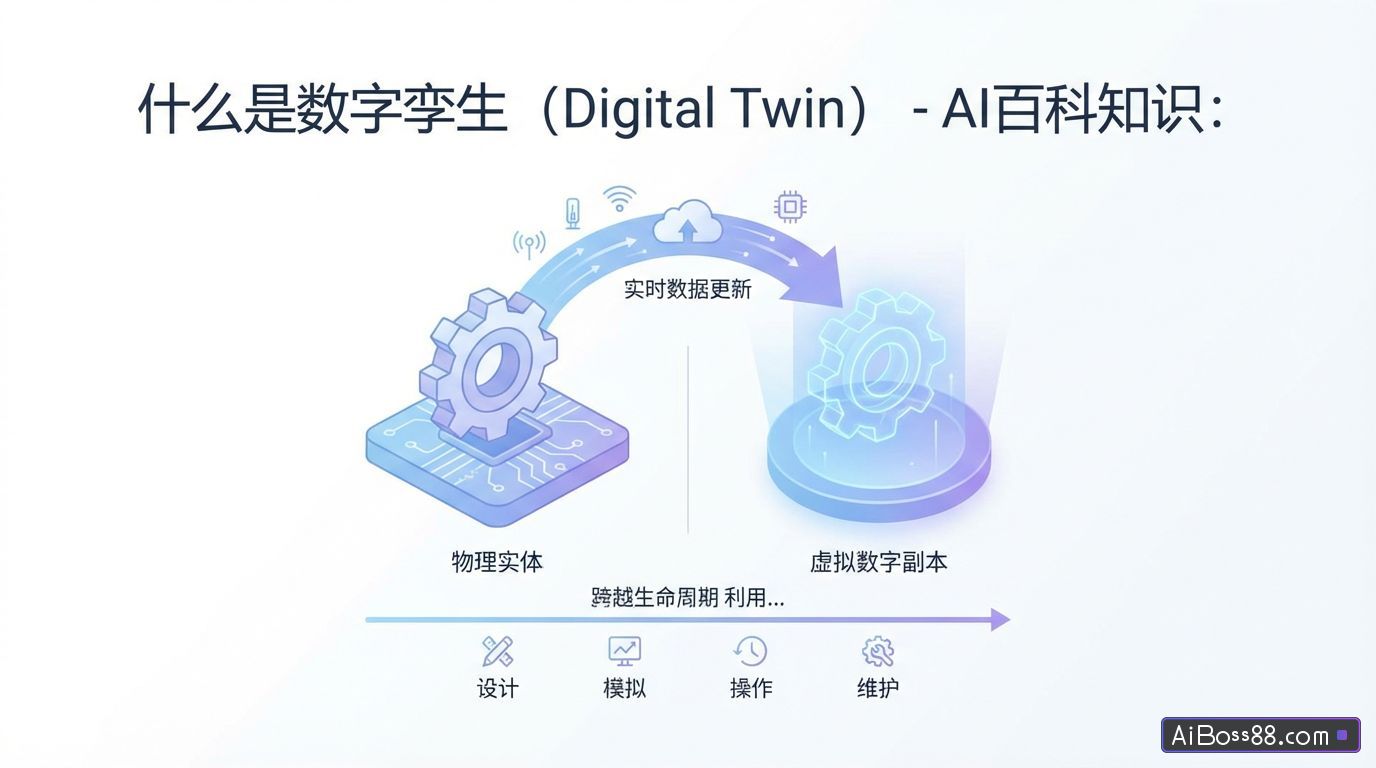
A digital twin is a virtual, digitized entity that corresponds to a physical entity in the real world. It uses sensors, data analysis, and simulation technologies to model and simulate physical entities in the real world, enabling real-time monitoring, prediction, and optimization. A digital twin typically consists of three parts: the physical entity, the digital model, and data connectivity. The physical entity is a real-world object, such as a machine, equipment, or factory. The digital model is the core of the digital twin; it is a virtual model that corresponds to the physical entity. Data connectivity is the technology that connects the physical entity and the digital model, including technologies such as sensors, data acquisition, data storage, and data analysis.
What is a digital twin?
A digital twin is a virtual digital copy of a physical entity or system that accurately reflects the state and behavior of its physical counterpart through real-time data updates. Digital twins span the entire lifecycle of an object, utilizing simulation, ...Machine LearningIt uses reasoning to aid in decision-making. It comprises three core components: physical entities, digital models, and data connectivity, with data connectivity including technologies such as sensors, data acquisition, storage, and analysis.
How digital twins work
Sensors mounted on physical objects collect various data about their performance, such as energy output, temperature, and weather conditions. The collected data is transmitted to a processing system, where it is applied to digital replicas. This is achieved through big data analytics and...Machine LearningThe algorithm enables the system to identify patterns, detect anomalies, and predict trends, extracting key features and patterns. Based on the processed data, a detailed virtual model of the physical object is constructed. This model can be a static geometric model or a dynamic physical model, used to simulate the behavior and performance of the physical object under different conditions, generating simulation results. These simulation results are presented to the user through charts, animations, and other formats, allowing the user to intuitively see the state of the physical object and the predicted results, facilitating monitoring and decision-making.
A two-way information flow exists between digital twins and data provided by sensors, meaning that digital twins can not only receive data from physical objects but also feed back insights and optimization suggestions to them, enabling real-time updates and optimizations. This achieves a seamless connection between the physical and digital worlds, allowing for accurate simulation of physical objects in a virtual environment to optimize design, improve efficiency, and facilitate preventative maintenance.
Main applications of digital twins
- Product design and prototypingDigital twins enable designers and engineers to collaborate better through 3D visualization, and to evaluate design and manufacturing alternatives for complex systems.
- Traffic ManagementDigital twin models can simulate urban traffic flow and optimize traffic light control. One major city reduced traffic congestion time by 15% through digital twin technology.
- Energy ManagementBy simulating urban energy consumption, energy allocation can be optimized. One smart city project used a digital twin model to reduce energy consumption by 10%.
- Patient monitoringDigital twin models can simulate a patient's physiological state and monitor their health status in real time. One hospital improved patient monitoring efficiency by 25% through digital twin technology.
- Surgical simulationBy simulating the surgical process, the success rate of surgery can be improved. One medical institution used a digital twin model to increase the surgical success rate by 15%.
- Power Grid ManagementDigital twin models can simulate power grid operation and optimize power distribution. One power company improved grid efficiency by 10% by using digital twin technology.
- Wind farm optimizationBy simulating wind farm operation, the layout of wind turbines can be optimized. One wind farm improved its power generation efficiency by 15% using a digital twin model.
- Vehicle monitoringDigital twin models can simulate vehicle operating conditions and monitor vehicle performance in real time. One logistics company reduced its vehicle failure rate by 20% by using digital twin technology.
- Route optimizationBy simulating flight routes, flight scheduling can be optimized. One airline improved its on-time performance by 15% using a digital twin model.
- Farmland ManagementDigital twin models can simulate farmland environments and optimize planting strategies. One farm increased crop yields by 15% through digital twin technology.
- Sales and MarketingFrom integrating 3D assets into e-commerce websites to creating virtual showrooms in VR, retailers can leverage digital twins to improve conversion rates, make more accurate purchasing decisions, thereby limiting returns and mitigating the environmental impact of e-commerce.
Challenges of Digital Twins
- Modeling complexityPhysical modeling of digital twins requires a deep understanding of the geometry, physical properties, and interactions of physical objects with their environment. Current modeling techniques cannot fully account for complex factors such as geology and climate.
- Data acquisition and integrationDigital twins rely on the input of large amounts of real-time data, but the difficulty of acquiring this data is often underestimated. In many cases, hardware devices cannot provide the required high-precision data, or data formats between different devices are incompatible, leading to difficulties in data integration.
- Real-time performance and performance bottlenecksAchieving real-time digital twins requires extremely high computing performance, especially when dealing with complex physical simulations. Existing computing resources and algorithms still face performance bottlenecks when handling large-scale data.
- Prediction accuracyThe core value of digital twins lies in their predictive capabilities, but in practical applications, the accuracy of these predictions is often affected by many factors. The effectiveness of the algorithm, the quality of the data, and changes in the external environment can all lead to deviations in the prediction results.
- Lack of industry standardsAs an emerging field, digital twins lack unified industry standards. This leads to significant differences in technical implementation and application scenarios among various vendors, making it difficult to develop a systematic and standardized solution.
- Multidisciplinary integrationThe application of digital twin technology often requires the integration of knowledge and technologies from multiple disciplines, such as mechanical engineering, data science,artificialintelligentAnd so on. The key to realizing the potential of digital twin technology lies in how to effectively integrate these different fields.
The Development Prospects of Digital Twins
The development prospects of digital twins have a profound impact on various industries and social sectors.Digital twin technology will be withartificialintelligentThe integration of cutting-edge technologies such as big data, the Internet of Things, 5G/6G communication, augmented reality (AR), and virtual reality (VR) will further enable more...High efficiencyData acquisition, transmission, processing, and analysis.It is currently widely used in smart cities, smart industries, smart buildings and other fields, and is expected to further penetrate into more areas in the future.intelligentMedicalintelligenttransportation,intelligentThe application of digital twin technology will provide broader development opportunities for various fields, including environmental protection. With the popularization of digital twin technology, relevant standards and specifications will gradually improve, enhancing the technology's compatibility and interoperability, reducing application costs, and promoting the healthy development of the industry. The application of digital twin technology will drive the improvement of related industrial chains, including data acquisition and transmission equipment, data processing and analysis software, and digital twin model construction and optimization services. With the country's emphasis on digital transformation, digital twin technology is expected to receive more policy support and financial investment. Simultaneously, inter-industry collaboration will also promote the development and application of digital twin technology. The development of digital twin technology will promote efficiency, sustainability, and innovation, having a positive impact on the environment and society, while also requiring consideration of its ethical implications and potential negative impacts. In conclusion, the future development prospects of digital twin technology are broad, and it is expected to play a key role in multiple fields, bringing about profound technological and social changes.