What are Deep Learning Frameworks? - AI Encyclopedia
Deep learning frameworks are a collection of software libraries and tools used to design, train, and deploy deep learning models. They provide the infrastructure needed to build complex neural networks, including data...
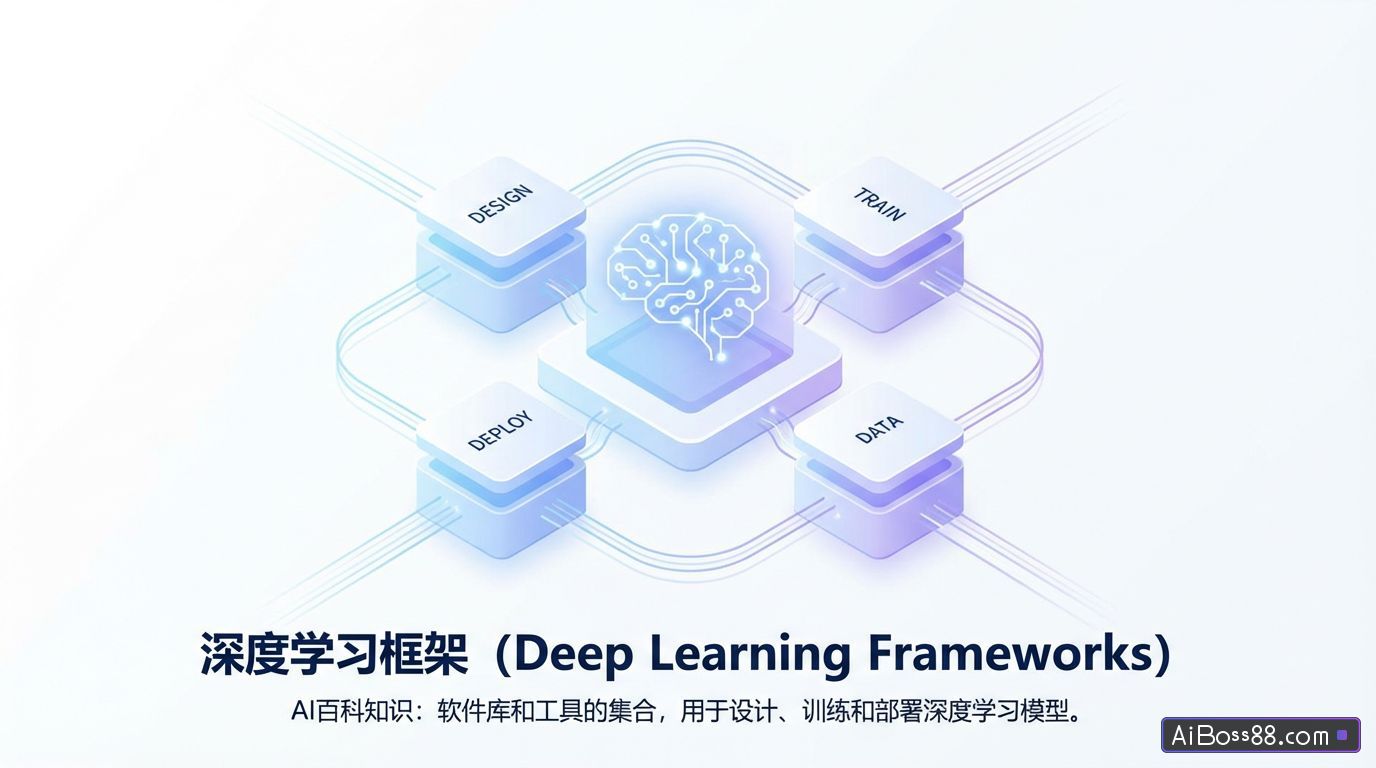
Deep learningFrameworks (Deep Learning Frameworks) are the key to unlocking...artificialintelligentKey tools for potential, providing researchers and developers with the ability to build, train, and deploy complex systems.Neural NetworksTheir capabilities and flexibility. As technology rapidly advances, these frameworks continuously evolve to adapt to new algorithm, hardware, and application requirements, driving...artificialintelligentThe boundaries of this field are constantly expanding. In this article, we will explore the core features of these frameworks, the challenges they face, and their future development directions.
What isDeep learningframe
Deep learningA framework (Deep Learning Frameworks) is a collection of software libraries and tools used for designing, training, and deploying deep learning systems.Deep learningModel. Provides a way to build complex...Neural NetworksThe required infrastructure includes data preprocessing, model building, activation functions, optimization algorithms, and hardware acceleration. PopularDeep learningFrameworks such as TensorFlow, PyTorch, and PaddlePaddle simplifyDeep learningThe model development process enables researchers and developers to more...High efficiencyConducting experiments and iterations in a thorough manner has promoted...artificialintelligentfieldfastdevelop.
Deep learningHow the framework works
Deep learningDeep Learning Frameworks enable complex computations by providing flexible computational graphs.Neural NetworksThe model. The computation graph consists of nodes and edges; nodes represent mathematical operations, and edges represent data flow. The framework supports user-defined model structures and...automaticDifferential techniques are used to optimize model parameters. During the training phase, the framework...automaticHandling the forward and backward propagation processes,High efficiencyThe gradient is calculated and the network weights are updated.
These frameworks also integrate various hardware acceleration libraries, such as GPUs and TPUs, to improve training and inference speed. They include rich APIs and support multiple...Deep learningModels and algorithms streamline the entire process from data loading to model deployment. Many frameworks also offer visualization tools and pre-trained models, further simplifying the development and debugging process.
Deep learningMain applications of the framework
Deep learningThe framework has a wide range of applications, covering multiple fields from basic research to commercial applications:
- Image recognition and processingUsed forautomaticIt can identify objects, scenes, and activities in images and is widely used in security monitoring, medical image analysis, and other fields.
- Natural Language ProcessingThis includes machine translation, sentiment analysis, text summarization, speech recognition and generation, and is applied to...intelligentassistant,automaticTranslation services, etc.
- recommendsystemE-commerce, social media, and content providers useDeep learningPersonalizationrecommendGoods, content, or services.
- automaticdriving a carIt plays a key role in vehicle environmental perception, decision-making, and path planning.
- Games and simulationsUsed for developing moreintelligentGamesAIThis enhances the interactivity and realism of the game.
- Medical diagnosisIt assists doctors in diagnosing diseases, such as identifying tumors by analyzing medical images.
- Speech recognitionConvert speech to text for use in voice assistants.automaticSubtitle generation, etc.
- RoboticsThis enables robots to better understand and respond to their environment, improving their autonomy and interaction capabilities.
- FintechIt plays a role in areas such as algorithmic trading, credit assessment, and fraud detection.
- Scientific researchSimulate complex systems in fields such as physics, chemistry, and biology to accelerate scientific discovery.
Deep learningChallenges facing the framework
Deep learningAlthough the framework has functionalitypowerfulHowever, it also faces some challenges in practical application and development:
- Ease of useFor beginners, the learning curve for some frameworks can be very steep, requiring a lot of time and resources to master.
- Performance optimizationAlthough the framework provides hardware acceleration support, optimization for specific tasks and hardware remains a challenge and requires expertise.
- ScalabilityAs models and datasets grow, frameworks need to be able to scale effectively to larger computing resources, such as multi-GPU and multi-node clusters.
- Memory Management:Deep learningModels, especially large models, can consume a lot of memory, which requires the framework to have...High efficiencyThe memory management mechanism.
- Model DeploymentDeploying a trained model to different platforms and devices may encounter compatibility and performance issues.
- Data privacy and securityWhen processing sensitive data, it is necessary to ensure the privacy and security of the data, which requires the framework to provide corresponding support.
- Interoperability between frameworksDifferent frameworks may have different interfaces and ecosystems, and migrating models and code can be difficult.
- Continuously updated:Deep learningThe field is developing rapidly, and the framework needs to be constantly updated to support it.up to dateThe algorithm and research progress may lead to API instability.
- Computational resource consumption:Deep learningModel training and inference typically require significant computational resources, which can be a limitation for some institutions and individuals.
- Explanatory and interpretable:Deep learningModels are often considered "black boxes," and improving their interpretability and interpretability is an important research direction.
Deep learningThe Development Prospects of the Framework
Deep learningThe development prospects of the framework are multifaceted, and with...artificialintelligentAs technology advances and application areas expand, these frameworks are constantly evolving and improving. Here are some possible development trends:
- Greater ease of useThe framework will place greater emphasis on user experience, providing simpler APIs and richer documentation to lower the barrier to entry for new users.
- Better performanceWith the development of hardware technology, the framework will provide more...High efficiencyOptimization of computational graph, morepowerfulIt offers distributed training support and more sophisticated hardware acceleration.
- Wider hardware supportIn addition to traditional GPUs and CPUs, the framework will expand its support to emerging hardware such as TPUs, FPGAs, and other custom hardware.
- automaticchangeMachine Learning(AutoML)The framework may integrate moreautomaticFunctions, such asautomaticHyperparameter tuning, neural architecture search, etc., to reduce manual intervention.
- Model compression and optimizationTo enable deployment of models on resource-constrained devices, the framework may offer more model compression and optimization tools.
- Enhanced interpretability and securityAs the need for transparency in the model decision-making process increases, the framework will provide more tools to explain model behavior and detect potential security issues.
- Cross-framework interoperabilityTo address compatibility issues between frameworks, more standardization efforts and cross-framework interoperability tools are likely to emerge.
- Integrated end-to-end development toolsThe framework may offer a more complete development toolchain, including data preprocessing, model training, evaluation, deployment, and monitoring.
- Cloud-native supportWith the increasing popularity of cloud computing, the framework will better support cloud-native applications and provide APIs and tools that can be seamlessly integrated with cloud services.
- Ethics and SustainabilityAs concerns about algorithmic ethics and environmental impact increase, the framework may integrate more features that take ethics and sustainability into account.
- Domain-specific optimization: Targeting specific application areas (such as healthcare, finance,automaticOptimized versions (such as those for driving) may become more popular.
- open sourceand community-driven:open sourceThe framework will continue to be driven by an active community, whose contributions will accelerate its development and innovation.