What are Evolutionary Algorithms? - AI Encyclopedia
Evolutionary algorithms are a class of optimization algorithms that simulate the process of biological evolution, searching for the optimal solution among a population of candidate solutions through mechanisms such as natural selection, heredity, and mutation. These algorithms typically include initialization...
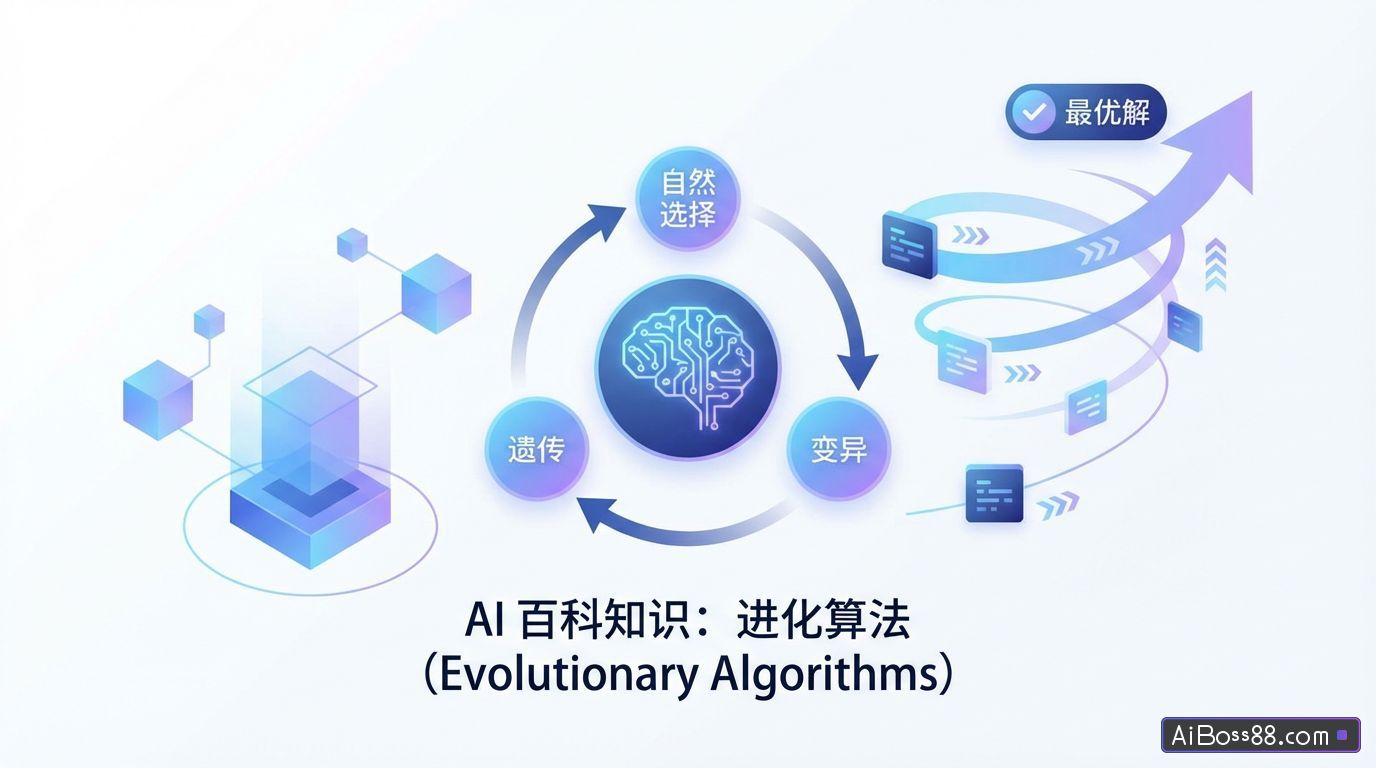
Evolutionary algorithms, with their unique biologically inspired characteristics, offer a completely new perspective for solving optimization problems. They simulate the fundamental principles of biological evolution in nature, such as heredity, mutation, and natural selection, and iteratively explore the solution space to find the optimal or satisfactory solution to the problem.artificialintelligentandMachine LearningWith the rapid development of technology, evolutionary algorithms are gradually becoming an indispensable tool in scientific research and engineering practice. In this introduction, we will unveil the mystery of evolutionary algorithms, explore their principles, applications, and future development directions, and appreciate the unique charm and infinite possibilities of this field.
What is an evolutionary algorithm?
Evolutionary algorithms are a class of optimization algorithms that simulate the process of biological evolution, searching for the optimal solution in a population of candidate solutions through mechanisms such as natural selection, heredity, and mutation. These algorithms typically include steps such as initialization, evaluation, selection, crossover (or recombination), and mutation, and are suitable for solving complex optimization problems, especially excelling in high-dimensional and nonlinear problems that traditional algorithms struggle with. Due to their robustness and ease of parallel processing, evolutionary algorithms are widely used in engineering, scientific research, and...artificialintelligentIt is widely used in the field.
How evolutionary algorithms work
Evolutionary algorithms mimic the biological evolutionary mechanism in nature, continuously improving solutions through an iterative process. Initially, the algorithm randomly generates a set of candidate solutions, called a population. In each generation, individuals in the population are evaluated according to a fitness function, which is typically related to the problem's objective function. The algorithm retains better individuals through a selection process and applies crossover (or recombination) and mutation operations to generate new individuals. Genetic operations simulate the heredity and variation of organisms, increasing the diversity of the population, thereby exploring the solution space and gradually approaching the optimal solution.
During the evolutionary process, the algorithm dynamically adjusts control parameters, such as mutation rate and population size, to balance the needs of exploration (discovering new solutions) and development (improving existing solutions). As iterations proceed, the algorithm gradually focuses on searching for more favorable regions while maintaining sufficient diversity to avoid getting trapped in local optima. When termination conditions are met, such as reaching a predetermined fitness threshold or an iteration limit, the algorithm stops and outputs the best solution found so far.
Main applications of evolutionary algorithms
Evolutionary algorithms because of theirpowerfulIts search capabilities and excellent global optimization performance have led to its widespread application in multiple fields:
- Engineering design optimizationIn fields such as mechanical design and structural design, it is used to find design parameters that minimize material usage and optimize performance.
- Machine LearningUsed for optimizationNeural NetworksThe weights and structure are adjusted to improve the performance of the learning algorithm.
- Scheduling problemIt solves problems such as job scheduling, routing, and vehicle pathing, thereby improving resource utilization and operational efficiency.
- Signal processingIt is used for feature extraction and pattern recognition in fields such as image processing and speech recognition.
- control systemDesigning and optimizing control strategies, such as PID controller parameters.automaticAdjustment.
- Data miningUsed for pattern recognition, cluster analysis, and classification problems to improve the accuracy of data mining.
- BioinformaticsFinding optimal solutions in bioinformatics problems such as gene sequence analysis and protein structure prediction.
- Economic ModelIt plays a role in financial market analysis, risk assessment, and portfolio optimization.
- gameAIUsed to develop the behavior of non-player characters (NPCs) in video games, making them more...intelligentIt is highly adaptable.
- Multi-objective optimization problemTo address complex problems with multiple conflicting objectives and find the optimal compromise solution that satisfies all objectives.
Challenges of Evolutionary Algorithms
While evolutionary algorithms have performed well in many fields, they also face some challenges and limitations:
- Convergence speedFor high-dimensional and complex problems, evolutionary algorithms may require a large number of iterations to find the optimal solution, which results in a slow convergence speed.
- Parameter settingsThe performance of an algorithm largely depends on the settings of parameters (such as population size, crossover rate, and mutation rate), and the optimal values of these parameters are often related to the specific problem and are difficult to determine in advance.
- Local OptimumAlthough evolutionary algorithms are designed with various mechanisms to avoid getting trapped in local optima, in some cases the algorithm may still converge to a local optimum rather than the global optimum.
- Computing resourcesEvolutionary algorithms typically require significant computational resources, including CPU time and memory, due to the need for multiple iterations and evaluations, which limits their application in resource-constrained environments.
- Diversity maintenanceMaintaining population diversity during evolution is key to avoiding premature convergence, but as iterations progress, maintaining sufficient diversity becomes increasingly difficult.
- The complexity of adaptive landscapeThe fitness landscape of the problem is very complex, containing multiple peaks, flat areas, or noise, making it difficult for evolutionary algorithms to search effectively.
- Challenges in practical applicationsIn practical applications, the dynamic changes of problems, the diversity of constraints, and the need for multi-objective optimization all increase the difficulty of designing and implementing evolutionary algorithms.
- Theoretical basisDespite the success of evolutionary algorithms in practice, their theoretical foundation is not perfect, and there is a lack of in-depth understanding of the behavior and performance of the algorithms.
- Parallelization and Distributed ComputingAlthough evolutionary algorithms have parallelism, how to effectively implement parallelization and distributed computing, as well as how to manage communication and synchronization, remains a challenge.
- Algorithm comparison and selectionThere are many variations and strategies of evolutionary algorithms, and selecting the most suitable algorithm for a specific problem requires a lot of experimentation and experience.
The Development Prospects of Evolutionary Algorithms
Evolutionary algorithms have a promising future. With increased computing power and a deeper understanding of algorithm theory, they are expected to demonstrate greater potential in handling larger-scale and more complex problems. In the future, evolutionary algorithms may be combined with...Machine Learning,Deep learningThe closer integration of these technologies will enable the solution of multi-objective optimization and dynamic adaptive problems. Improvements in the adaptive capabilities, parallel processing, and distributed computing capabilities of algorithms will further drive their application in engineering, scientific research, and business decision-making. A deeper understanding of the internal mechanisms of algorithms and...High efficiencyImplementing this will help improve its reliability and efficiency in practical problems.