What are Generative Models? - AI Encyclopedia
Generative models are a class of models in machine learning used to learn the distribution of data. They generate new data samples by learning the joint probability distribution of the training data. These models can simulate datasets...
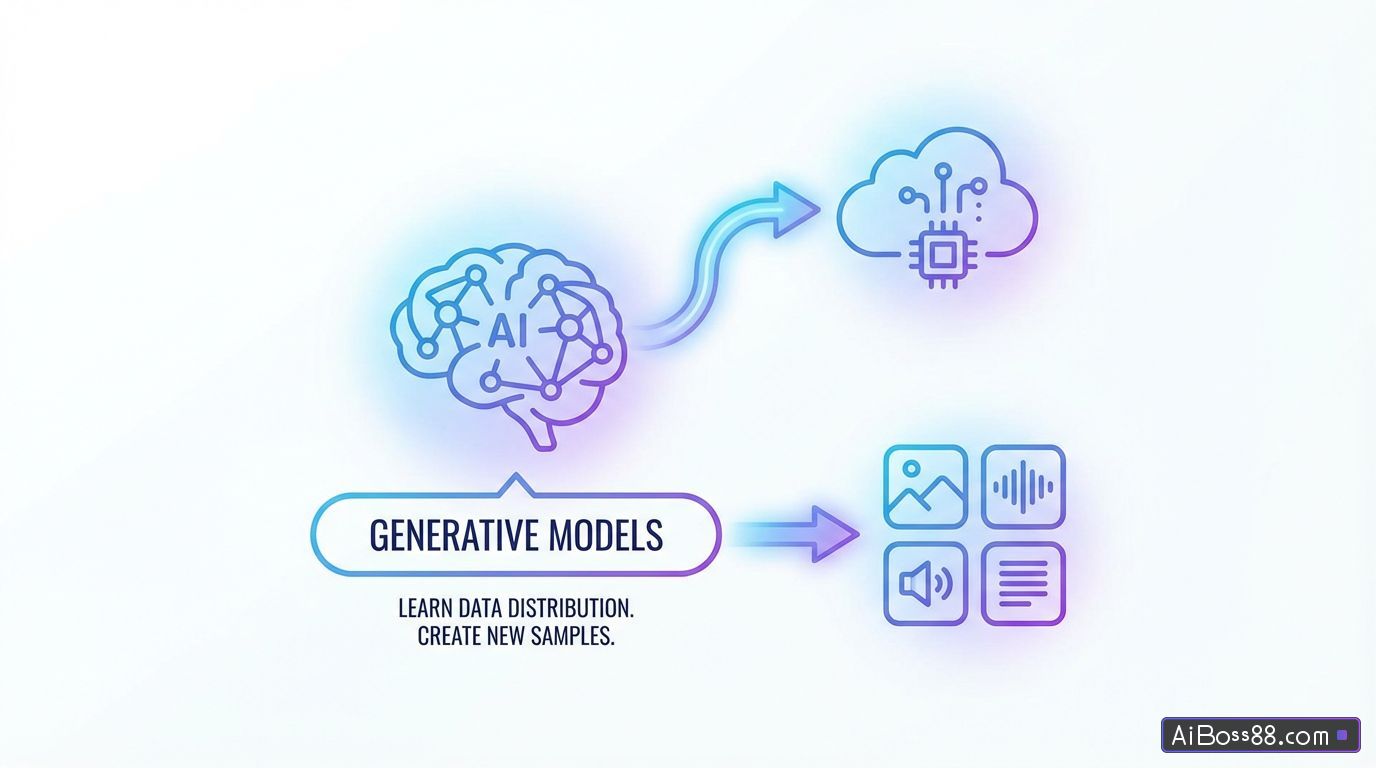
Generative models are leading the way with their unique creativity and potential.artificialintelligentA new wave in the field. These are not merely collections of algorithms, but keys to unlocking limitless possibilities, offering a glimpse into how machines learn to "imagine." From lifelike virtual paintings to personalized content creation, generative models, with their remarkable capabilities, continuously push the boundaries of technology. Generative models are gradually changing the way we interact with machines, bringing profound impacts to human society. This article will delve into the mysteries of generative models, revealing how they learn and create from data, and foreseeing their role and potential in the future world.
What is a generative model?
Generative models are a class of models that can learn the distribution of data and generate new samples.Machine LearningGenerative models create new instances that resemble real-world data but have never appeared before by capturing patterns in the training dataset. These models are widely used in image, audio, and text synthesis, including tasks such as image generation, style transfer, and text-to-image translation. Common generative models include autoregressive models, variational autoencoders (VAEs), and generative adversarial networks.
How Generative Models Work
Generative models work by learning the statistical patterns and structural features of the training dataset to build a model that can describe the data distribution. This model is then used to generate new data samples that are statistically similar to the original training data but contain entirely new information. These samples can then be used for data augmentation, artistic creation, simulation, and many other applications.
Main applications of generative models
Generative models have a wide range of applications, spanning fields from artistic creation to data science. Here are some key application examples:
- Image generationGenerative models can be used to create new images that are visually indistinguishable from real images, and can be applied to artistic creation, game design, virtual reality, and more.
- Style transferIn the field of art, generative models can apply an artistic style to another image, achieving style transfer.
- Data Augmentation:existMachine LearningIn this context, generative models can be used to increase the diversity of training datasets and improve the generalization ability of models, which is especially useful when data is scarce.
- Image restoration and super-resolutionBy learning the low-frequency and high-frequency features of an image, generative models can be used to repair damaged images or improve image resolution.
- Text generationGenerative models can be used to generate natural language text such as articles, poems, and dialogues, and can be applied to fields such as chatbots and content creation.
- Speech SynthesisIn the field of audio processing, generative models can synthesize new speech segments for use in training speech recognition systems or generating voices for virtual assistants.
- Game developmentIn game design, generative models can be used forautomaticGenerate game environments, level designs, or behavioral patterns of non-player characters (NPCs).
- Medical ImagingGenerative models can help generate medical imaging data to enhance diagnostic accuracy or provide additional data when training medical image analysis algorithms.
- Augmented Reality (AR) and Virtual Reality (VR)Generative models can create realistic virtual environments and objects, enhancing the realism of AR and VR experiences.
- Simulation and predictionIn scientific research and engineering, generative models can simulate the behavior of complex systems for prediction and decision support.
Challenges of Generative Models
While generative models have shown great potential and application value in many fields, they also face some challenges in practical application and research:
- High-quality sample generationGenerative models need to generate high-quality, high-resolution samples that are indistinguishable from real data, which is a huge technical challenge.
- Mode CollapseWhen training a generative model, the model may generate some samples that look different visually, but are actually just repetitions of a few patterns, rather than an accurate representation of the entire data distribution.
- Data diversity and coverageGenerative models need to be able to capture and generate all possible variations in the training data, which is especially difficult when the data is highly diverse.
- Evaluation indicatorsDeveloping objective and accurate evaluation criteria for the performance of generative models is a challenge, as the generated samples need to be visually and statistically similar to the real samples.
- Computing resources:trainHigh efficiencyGenerative models typically require significant computational resources and time, which limits their scalability and...practicalsex.
- CounterattackIn security-sensitive applications, generative models may be used to generate misleading samples, such as deepfakes, raising concerns about model security and ethics.
- Explanatory and ControllableGenerative models are often considered "black boxes," making it difficult to explain their internal workings. Furthermore, controlling the generation process is challenging, especially when specific types of output are required.
- Data privacyGenerative models require a large amount of data during training, which may involve privacy and data protection issues.
- Legal and ethical issuesThe application of generative models may raise legal issues such as copyright and portrait rights, as well as ethical issues related to generated content.
- Generalization abilityMaintaining good generalization ability is a challenge for generative models when faced with new and unseen data distributions.
Future prospects of generative models
Generative models have broad development prospects, and withDeep learningWith continuous technological advancements, generative models are expected to see applications in image and video synthesis,Natural Language ProcessingGenerative models are playing an increasingly important role in fields such as virtual reality, game development, and artistic creation. Researchers are also working to address existing challenges, such as improving sample quality, enhancing model interpretability and controllability, optimizing computational efficiency, and exploring new application scenarios to make generative models more...intelligent,High efficiencyAnd safety. Furthermore, as ethical and legal issues become clearer, generative models will bring more innovation and value to various industries while ensuring social responsibility and ethical standards.