What is Speech Synthesis? - AI Encyclopedia
Speech synthesis is a technology that converts text information into spoken language. It simulates the human pronunciation mechanism by analyzing text content, extracting language features, and then using acoustic models to convert them into sound signals, ultimately...
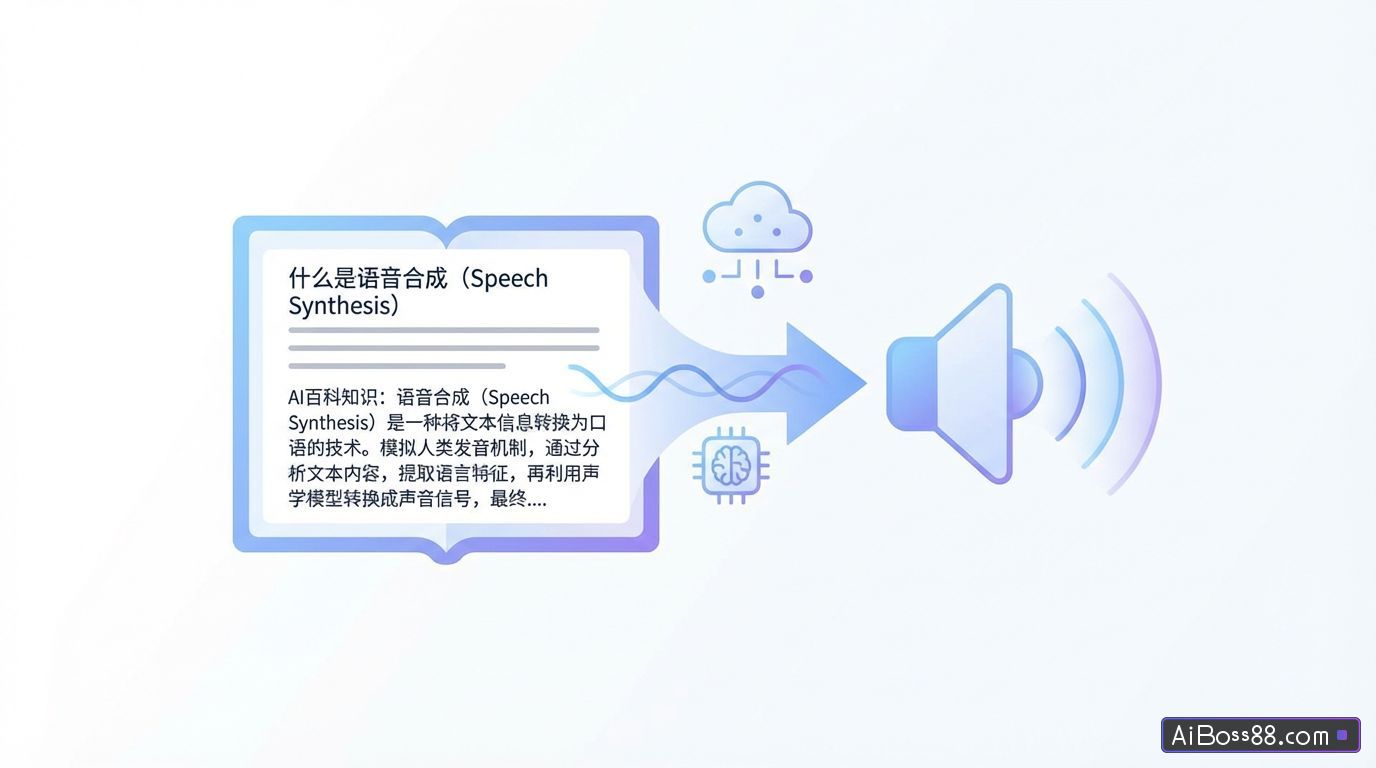
Speech synthesis, a key technology in human-computer interaction, is gradually permeating all aspects of our daily lives. By converting text information into spoken language, it greatly improves the convenience of information acquisition and provides important support for visually impaired individuals and multilingual learners.artificialintelligenttechnologyfastWith advancements, speech synthesis technology is continuously progressing towards becoming more natural, fluent, and emotionally rich, indicating that future machine-human communication will be more seamless and human-centered.
What is speech synthesis?
Speech synthesis is a technology that converts text information into spoken language. It simulates the human pronunciation mechanism by analyzing text content, extracting language features, and then using acoustic models to convert them into sound signals, which are ultimately "read aloud" by a device. This technology is widely used in...intelligentIn fields such as assistants, audio reading, and navigation systems, it has greatly promoted the naturalness and convenience of human-computer interaction.
How speech synthesis works
The working principle of speech synthesis technology mainly consists of two stages: text front-end processing and acoustic model synthesis. In the text front-end processing stage, the system analyzes the input text, including text regularization, prosodic prediction, glyph conversion to phonemes, and handling polyphonic characters and tone sandhi. The purpose of this stage is to extract pronunciation and linguistic information from the text, converting it into a series of phonemes and prosodic features to provide the necessary input for speech synthesis.
In the acoustic model synthesis stage, based on the phoneme and prosodic information provided by the text front-end, the acoustic model is responsible for generating the acoustic parameters of the speech, such as fundamental frequency and spectrum. These acoustic parameters are then converted into audible speech waveforms using a vocoder. The vocoder can be based on traditional signal processing methods or...Deep learningThe technology is used to synthesize speech waveforms, which are then output through a speaker to reproduce natural, fluent, and expressive speech.
Main applications of speech synthesis
Speech synthesis technology has a wide range of applications, primarily in the following areas:
- intelligentAssistants and chatbots:existintelligentcell phone,intelligentIn home appliances and online customer service systems, speech synthesis technology enables virtual assistants to communicate with users in a natural voice.
- Audiobooks and Educational SoftwareTo provide audiobooks and educational materials for visually impaired people or those who need hearing assistance in their studies, making reading and learning more convenient.
- In-vehicle navigation systemProvides voice navigation instructions during driving to improve driving safety.
- News broadcasts and information broadcasts:automaticEfficiently convert news text into audio broadcasts, especially in emergency situations.fastTo disseminate information.
- Language learning and translationIt helps language learners practice pronunciation and listening skills, while providing audio output for multilingual translation.
- Entertainment and MediaGenerate realistic voice acting for characters in video games, movies, and animation production.
- Public servicesProvided in public places such as public transportation, airports, and train stationsautomaticVoice announcements are used to guide passengers and disseminate information.
- assistive technology: To provide speech synthesis tools for people with language barriers or communication difficulties, helping them to communicate better with the outside world.
- Emergency ServicesIn emergency situations, such as natural disasters or security threats,fastGenerate alerts and guidance voice messages.
- Personalized voice serviceIt supports users in creating personalized voice synthesis, such as customizing the gender, age, and emotion of the voice to meet specific needs.
Challenges of speech synthesis
While speech synthesis technology has made significant progress, it still faces some challenges:
- NaturalnessSynthetic speech needs to be more natural and fluent, to closely resemble the way humans speak naturally, including appropriate intonation, rhythm, and emotional expression.
- Emotion and rhythmHuman speech is rich in emotion and rhythmic variations, and current speech synthesis systems still have limitations in simulating these subtle changes.
- Multilingual and dialect supportSpeech synthesis of different languages and dialects needs to take into account the differences in phonemes, pronunciation rules and prosodic features, which poses a challenge to the generalization ability of the model.
- Real-timeIn certain application scenarios, such as real-time translation or interactive dialogue systems, speech synthesis systems are required to...fastRespond and generate speech.
- PersonalizationUsers may want the speech synthesis system to simulate the voice of a specific person or have specific speech characteristics, requiring the system to be highly customizable.
- Computing resourcesHigh-quality speech synthesis often requires a lot of computing resources, which is a challenge on resource-constrained devices.
- Data scarcityFor some less common languages or dialects, high-quality speech data is difficult to obtain, which limits the training and optimization of speech synthesis models.
- noise immunityIn noisy environments, speech synthesis systems need to output clear speech while maintaining speech quality.
- contextual understandingWhen synthesizing speech, it is necessary to accurately understand the context of the text to ensure the accuracy and appropriateness of the speech output.
- User privacy and securityWith the increasingly widespread application of speech synthesis technology, how to protect user privacy and data security has become an important issue.
- Legal and ethical issuesSynthetic speech could be used to forge identities or spread misinformation, raising legal and ethical concerns.
The Development Prospects of Speech Synthesis
Speech synthesis technology has broad development prospects, withDeep learningWith the continuous advancement of advanced technologies, future speech synthesis will place greater emphasis on improving the naturalness and emotional expression of synthesized speech, achieving more accurate and nuanced prosodic control. Personalization and multilingual support will be strengthened, enabling speech synthesis to better adapt to diverse application scenarios and user needs. With increased computing power and model optimization, real-time…High efficiencySpeech synthesis services will become more widespread, and improvements in privacy protection, data security, and ethical regulations will provide a guarantee for the healthy development of speech synthesis technology. Overall, speech synthesis technology will continue to move towards greater human-like...intelligentIt is developing in the direction of modernization and popularization.