What is Neuro-Symbolic Integration? - AI Encyclopedia
Neuro-Symbolic Integration is an artificial intelligence technique that combines the learning capabilities of neural networks with the logical reasoning abilities of symbolic artificial intelligence. It leverages neural networks to handle data-intensive tasks...
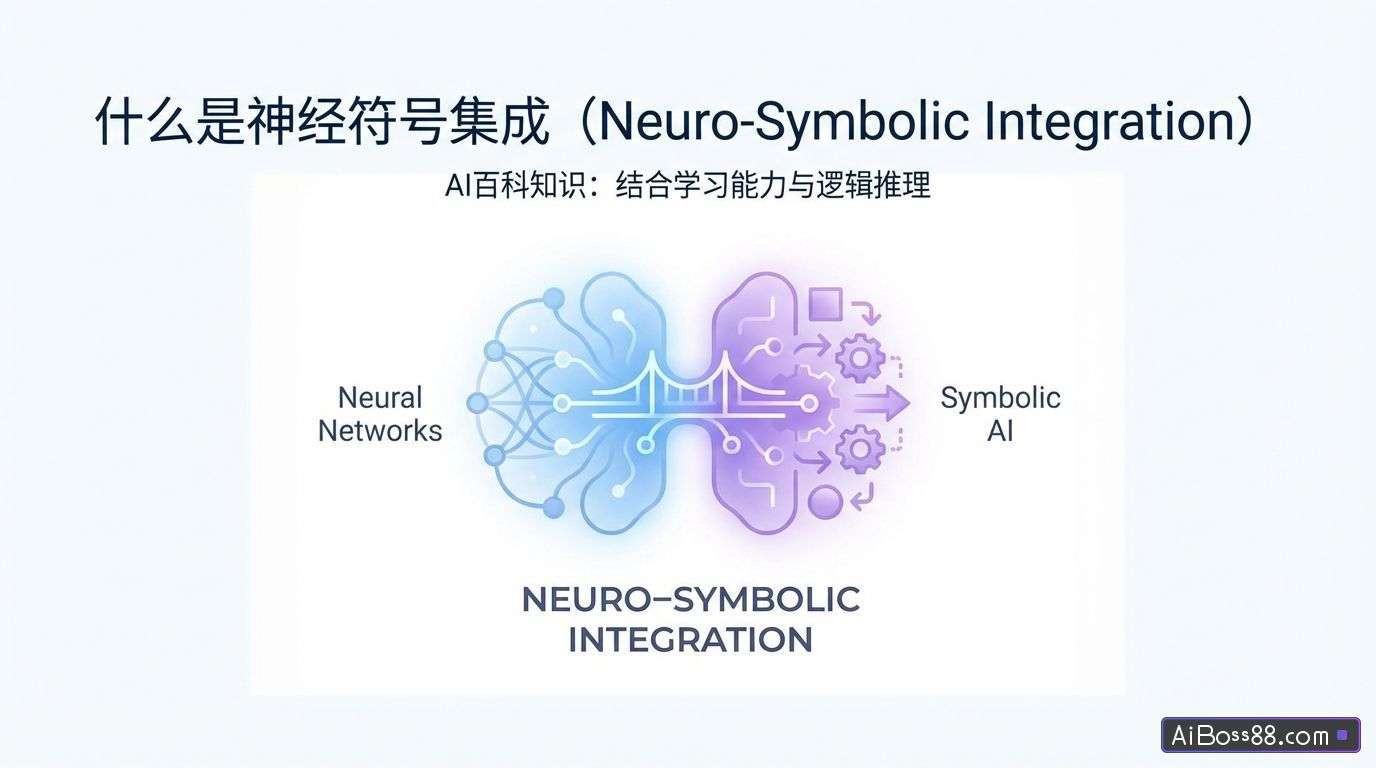
existartificialintelligentIn this grand vision, Neuro-Symbolic Integration represents an innovative fusion path, aiming to integrate...Neural NetworksThe data processing capabilities and logical reasoning abilities of symbolic systems are combined, thus broadening the scope of machine learning.intelligentThe boundaries, for building moreHigh efficiencyMore explainableintelligentThe system offers new possibilities. With continuous technological advancements, neurosymbolic integration is gradually becoming a driving force...artificialintelligentA key force for advancing to higher levels. This article will delve into the core concepts, implementation methods, and application prospects of neurosymbolic integration in multiple fields, revealing how this interdisciplinary field can contribute to solving complex...intelligentThe problem offers new perspectives and tools.
What is neurosymbolic integration?
Neuro-Symbolic Integration is a type ofartificialintelligentTechnology, combined withNeural NetworksLearning ability and symbolsartificialintelligentLogical reasoning ability. Based onNeural NetworksIt addresses data-intensive tasks such as pattern recognition while employing symbolic logic to implement interpretable decision-making processes. The goal of neurosymbolic ensembles is to create systems capable of complex reasoning, learning new tasks, and adapting to new environments.intelligentThe system, while maintaining the transparency and interpretability of the decision-making process, improves...AIThe system shows great potential in terms of robustness, flexibility, and comprehensibility.
How Neural Symbol Integration Works
The working principle of Neuro-Symbolic Integration is to combine...Neural NetworksIt combines data processing and pattern recognition capabilities with the logical reasoning and knowledge representation capabilities of symbolic systems.Neural NetworksOne part is responsible for extracting features from raw data and learning complex input-output mappings, while the symbolic system is responsible for transforming these data and patterns into meaningful symbolic representations, which can be processed through logical rules and reasoning processes. This ensemble approach enables...AIThe system is able to reason effectively based on the knowledge it has learned, while maintaining its ability to handle uncertainty and ambiguity.
In neurosymbolic ensemble systems, knowledge is stored in the form of rules and logic, and neural models provide the ability to weight and instantiate these rules. For example, a neurosymbolic system might use...Neural NetworksIt identifies objects in images and then uses symbolic reasoning to interpret the relationships between these objects. This combination enables the system to handle highly structured tasks such as natural language understanding, complex decision-making, and problem-solving, while providing deep insights and explanations of the decision-making process.
Main applications of neural symbol integration
The main application areas of neural symbol integration include:
- Natural Language Processing(NLP)In language understanding, machine translation, sentiment analysis, and question answering systems, neurosymbolic ensembles can help models better understand and process the complexity of language, providing more accurate semantic interpretation and reasoning.
- Knowledge Graph ConstructionBy combiningNeural NetworksWith its pattern recognition capabilities and logical reasoning of symbolic systems, neurosymbolic integration helps extract structured knowledge from large amounts of data and build and maintain knowledge graphs.
- Medical diagnosisIn the medical field, neurosymmetric integration can assist in the analysis of patient data, combining it with a medical knowledge base to provide disease diagnosis and treatment recommendations, thereby improving the accuracy and efficiency of diagnosis.
- recommendsystem:existrecommendIn the system, neurosymbolic ensemble can utilize user behavior data and item attributes to enhance symbolic logic.recommendThe interpretability of the results provides greater transparency.recommendreason.
- automaticdrive:existautomaticIn driving technology, neurosymbolic integration can help vehicles perform environmental perception, decision-making and planning, and behavior prediction, while ensuring the safety and compliance of the system.
- RoboticsNeurosymbolic integration can endow robots with more advanced reasoning and decision-making abilities, enabling them to perform effective task planning and problem-solving in complex environments.
- Educational Technology:existintelligentIn education and e-learning platforms, neurosymbolic integration can provide personalized learning pathways.recommendAt the same time, logical reasoning is used to explain the basis for the learning suggestions.
- Legal AnalysisIn the legal field, neurosymmetric integration can help analyze legal documents, extract key information, and combine legal logic to conduct case analysis and predict judgments.
- Game developmentIn the gameAIIn this context, neurosymbolic ensembles can be used to create systems capable of complex strategy planning and adapting to player behavior.intelligentNon-player characters (NPCs).
- Data mining and analysisIn businessintelligentIn market analysis, neurosymmetric ensembles can reveal patterns and relationships in data, while providing logical explanations for decision support.
Challenges of Neural Symbol Integration
While neural symbol integration holds immense potential, it still faces several challenges in practical applications and research:
- Knowledge representation and integrationHow to effectively combine the precision and structuring of symbolic knowledge with...Neural NetworksCombining these learning abilities is a key challenge. Research is needed on how to represent and integrate knowledge from different domains.
- Explainability and transparencyAlthough the symbol system itself has high interpretability,Neural NetworksIt is often considered a "black box". How to design neurosymbolic integration systems that can provide both accurate predictions and clear interpretations is an important question.
- Learning efficiency and data requirements:Neural NetworksTraining typically requires large amounts of data, while symbolic systems rely on explicit rules. Balancing these two approaches to improve learning efficiency and reduce dependence on large amounts of labeled data is a technical challenge.
- Reasoning and logical consistencyEnsuring logical consistency and correctness in the reasoning process is a challenge in integrated systems. It requires the development of reasoning algorithms capable of handling uncertainty and ambiguity.
- System design and architectureDesign a system that can utilizeNeural NetworksA system architecture that combines generalization capabilities with effective symbolic reasoning is a complex task. New system design methods and architectures are needed to support this integration.
- Computational resources and efficiencyNeural symbolic ensemble systems can require significant computational resources, especially when dealing with large-scale data and complex reasoning tasks. Optimizing algorithms to improve computational efficiency is a challenge.
- Adaptability in dynamic environmentsIn a dynamically changing environment, the system needs to be able tofastAdapting to new circumstances. Designing a neurosymmetric ensemble system capable of learning online and updating knowledge in real time is a challenging problem.
- interdisciplinary collaborationNeurosymbolic integration is an interdisciplinary field involving multiple disciplines such as computer science, cognitive science, neuroscience, and logic. Facilitating collaboration and knowledge sharing among experts from different fields is a challenge.
- Standardization and sharing platformThe lack of unified standards and shared platforms may limit neural symbol integration technology.fastDevelopment and widespread application. Establishing common frameworks, tools, and evaluation standards is key to driving the development of this field.
- Ethical and social impactAs neurosymmetric integrated systems are increasingly used in various fields, ensuring that the decision-making processes of these systems comply with ethical standards and social values is an important consideration.
The Development Prospects of Neural Symbol Integration
Neurosymbolic integration as fusionDeep learningAs a cutting-edge field of logical reasoning, its development prospects are broad. With continuous algorithm optimization and improved computing power, this field is expected to see significant growth.AISignificant progress has been made in the interpretability, robustness, and ability to handle complex tasks of the system. In the future, neural symbolic ensembles may...automaticKnowledge discoveryintelligentDecision support systems, personalizationrecommendIt plays a key role in multiple fields such as natural language understanding, and promotesartificialintelligentFrom narrow dedicatedintelligentTowards broader general useintelligentDevelopment, while building a moreintelligentand autonomousAIThe system lays the foundation.