What is Neural Style Transfer? - AI Encyclopedia
Neural style transfer uses deep learning to apply the visual style of one image to the content of another, creating a new image that blends the characteristics of both. It is based on pre-trained convolutional...
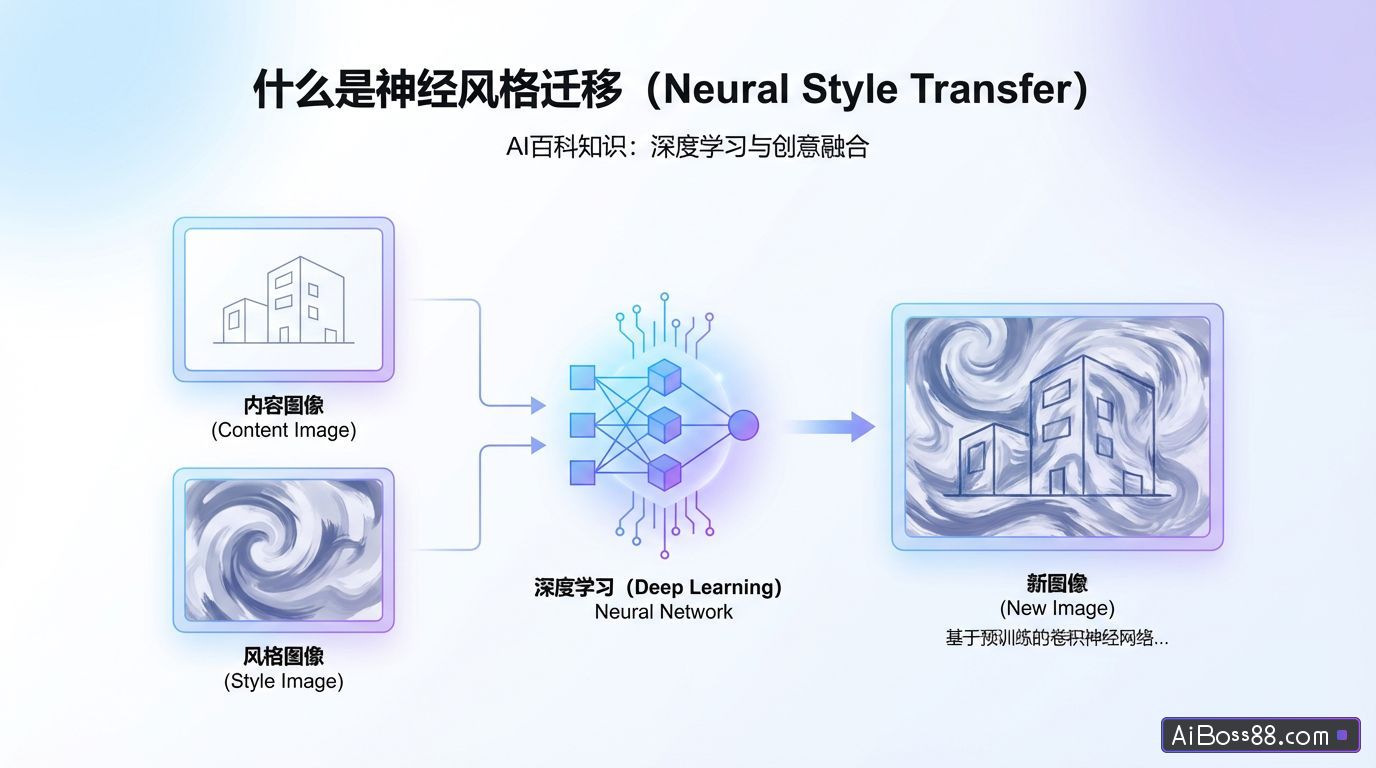
Neural Style Transfer (NST) is a technology that...artificialintelligentA breakthrough in the field, throughDeep learningThe algorithm achieves the integration of artistic style and image content.intelligentThe fusion of computer vision and artistic creation marks a crossover and brings new development opportunities to image processing technology. This article will delve into the working principles, implementation methods, and application potential of neural style transfer in multiple fields, aiming to provide readers with a comprehensive and objective technical overview.
What is neural style transfer?
Neural style transfer is achieved through...Deep learningThis technique applies the visual style of one image to the content of another, creating a new image that blends the characteristics of both. It is based on pre-trained convolutional algorithms.Neural NetworksThis technique analyzes the texture and color distribution of stylistic images, as well as the structural layout of content images, and then uses optimization algorithms to find and generate new images that are stylistically similar to reference images and content-consistent with target images. This technology shows great potential in artistic creation, image processing, and visual design.
How Neural Style Transfer Works
The working principle of neural style transfer is based onDeep learningConvolution inNeural Networks(CNN). Neural style transfer uses CNNs to extract features from content images and style reference images. Content images are typically captured through deeper layers in the CNN because these layers better encode the high-level semantic information of the image. Style images are analyzed through shallower layers of the CNN, which capture style features such as texture, color, and local patterns. By calculating the difference between the feature representations of the content and style images at their respective layers, a loss function can be constructed that measures the similarity between the generated image and the target content and style.
To generate new images, neural style transfer utilizes optimization algorithms, such as gradient descent, to adjust the pixels of an initial image (typically a copy of the content image) to minimize a loss function. The process involves continuously updating the image pixels so that its content gradually approximates the content image while its style approximates the style reference image. Through iterative processing, the final generated image visually retains the main structure of the content image while reflecting the artistic style of the style reference image. This approach can be applied not only to still images but also extended to video style transfer, offering new possibilities for digital art creation and the entertainment industry.
Main applications of neural style transfer
Neural style transfer technology has a wide range of applications, covering multiple fields such as artistic creation, entertainment, design, education, and research. Below are some key application examples:
- Artistic CreationArtists and designers can use neural style transfer technology to create works with specific artistic styles, such as applying the style of Van Gogh or Picasso to modern photographs to generate unique artistic effects.
- Social media and appsOn social media platforms, users can use style transfer technology to add various artistic styles to their personal photos, increasing the fun and creativity of their shared content.
- Film and video productionFilmmakers and video artists can use this technology to add a consistent artistic style to videos, or in post-production.fastTo achieve complex visual effects.
- Game developmentGame designers can use neural style transfer to generate unique visual styles for game scenes or characters, enhancing the game's visual experience and artistic atmosphere.
- Interior DesignDesigners can use this technology to preview the impact of different art styles on interior spaces, helping clients make more informed decisions before renovation.
- Education and trainingIn the field of education, neurostyle transfer can be used as a teaching tool to help students understand art styles and visual design principles.
- Augmented Reality (AR) and Virtual Reality (VR)In AR and VR applications, style transfer can be used to create immersive environments or add artistic effects to objects and scenes in virtual worlds.
- Advertising and MarketingMarketers can use neural style transfer technology to create eye-catching advertising images and videos to attract the attention of potential customers.
- Data visualizationIn data visualization, style transfer techniques can be used to enhance the visual appeal of charts and graphs, making information delivery more intuitive and engaging.
- Personalized productsBusinesses can offer personalized services, such as converting users' photos into a specific style and printing them on T-shirts, mugs, or other merchandise.
Challenges of Neural Style Transfer
While neural style transfer has achieved remarkable success in artistic creation and image processing, it also faces some challenges and limitations:
- High computational resource consumptionStyle transfer typically requires significant computational resources, especially when processing high-resolution images or videos. This can limit its application in resource-constrained environments.
- Balance between style and contentFinding a proper balance in style transfer that preserves the main features of the content image while fully expressing the style of the style image is a challenge.
- Style diversityFor certain styles, especially abstract or difficult-to-define styles, algorithms may struggle to capture and reproduce them. This limits the application of style transfer techniques across diverse art styles.
- Training timeGenerating high-quality style transfer results usually requires a lot of iterative optimization, which can lead to a long training process.
- Generalization abilityCurrent style transfer models are often trained for specific styles and may not generalize well to new, unseen styles.
- User interaction and controlProviding users with intuitive controls to adjust the style and content of generated images is a challenge, especially without explicit guidance.
- Art copyright and ethical issuesUsing the style of famous artists for style transfer may raise copyright and ethical issues, especially in commercial applications.
- Image qualityDuring style transfer, some image details may be lost, resulting in a visually unclear or unnatural image.
- Model interpretability:Deep learningModels are often considered "black boxes" because it is difficult to explain their internal workings, which poses a challenge for users who want to understand the style transfer process.
- Real-time applicationsWhile style transfer technology has been successful in offline processing, it still faces performance and speed challenges in application scenarios that require real-time feedback (such as style transfer for live video streaming).
The Development Prospects of Neural Style Transfer
Neural style transfer, as an innovative image processing technique, has broad development prospects. With...Deep learningWith continuous model optimization and improved computing power, this technology is expected to achieve even greater [achievements] in the future.fast,EvenHigh efficiencyStyle transfer can be achieved while maintaining or improving image quality. By combining it with user interaction design, the controllability and personalization of style can be enhanced, further expanding its application in fields such as artistic creation, entertainment, and education. As research progresses, neural style transfer also shows potential in understanding and simulating the human artistic creation process, and may become a...artificialintelligentAn important bridge connecting art. Optimization of computing resource consumption and enhancement of stylistic diversity will make this technology more widespread, even enabling real-time style transfer effects on mobile devices, bringing users a richer visual experience.