What is an Objective Function? - AI Encyclopedia
The objective function is a core concept in mathematical optimization problems; it represents the functional relationship between the objective and the influencing factors. Simply put, the objective function is the function you are trying to calculate or optimize to achieve...
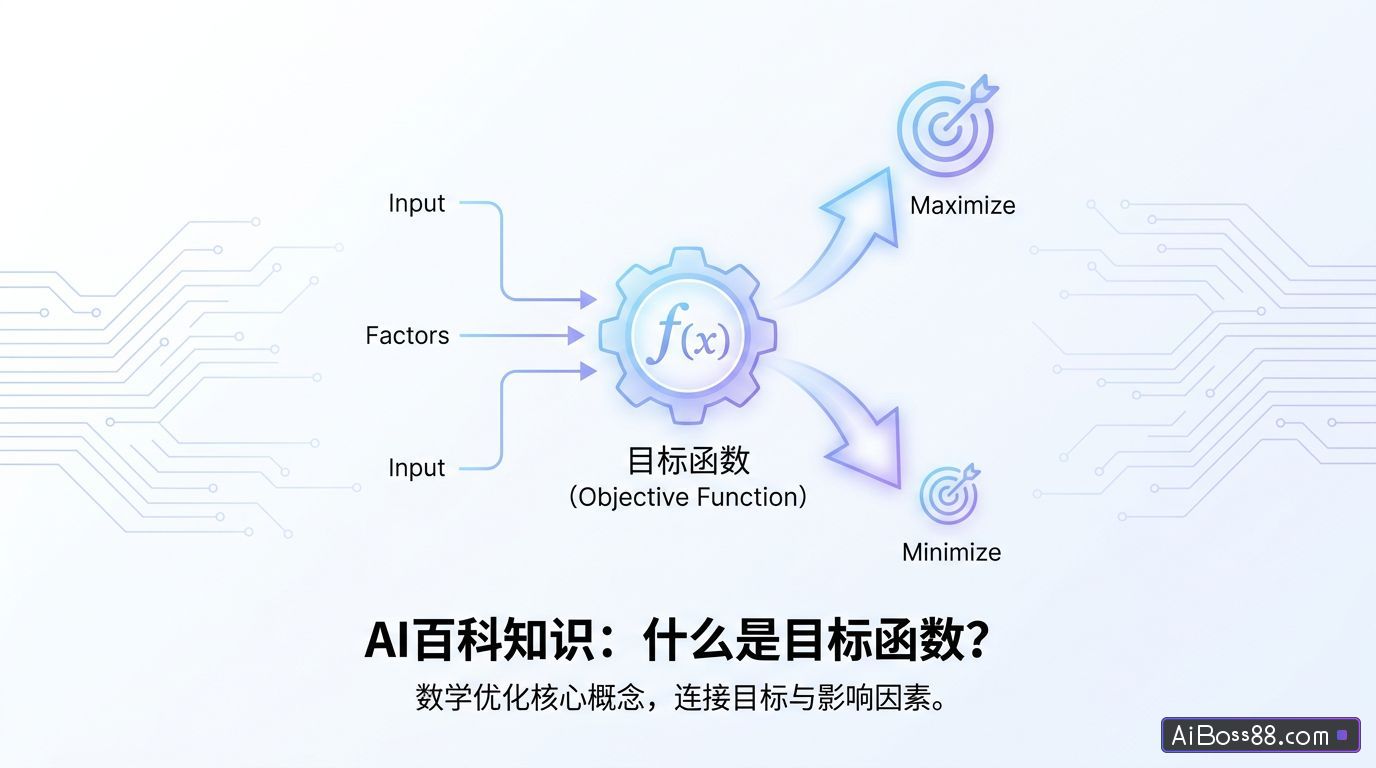
An objective function is a core concept in optimization problems. It represents a function that needs to be maximized or minimized to achieve the best result for a given problem. In mathematical terms, an objective function is usually expressed as... f(x),in x The objective function represents the decision variables that influence the outcome. In optimization, it serves as a standard for evaluating the performance of different solutions. By explicitly defining the objective function, various options can be systematically explored, and the solution that produces the most favorable result can be determined. Objective functions can be linear or nonlinear. Linear objective functions are characterized by a linear relationship between decision variables, while nonlinear objective functions involve more complex relationships. In practical applications, establishing the objective function is essentially finding the relationship between the design variables and the objective. This relationship can be represented by curves, surfaces, or hypersurfaces. In optimization design, sometimes multiple objective functions are established; this type of problem is called a multi-objective function problem. The more objective functions there are, the more comprehensive the evaluation of the design, but the more complex the calculations become.
What is an objective function?
The objective function is a core concept in mathematical optimization problems. It represents the functional relationship between the objective of interest and the influencing factors.SimpleIn general, the objective function is the function you attempt to achieve through calculation or optimization. In many cases, the objective function is unknown and needs to be derived from known conditions. In engineering terms, the objective function is a system performance standard, such as the lightest weight, lowest cost, or most efficient form of a structure; or the shortest production time or minimum energy consumption of a product.
How the objective function works
An objective function is a function that is minimized or maximized in an optimization problem. It quantifies the goal we want to achieve and guides the optimization algorithm to find the optimal solution.Machine LearningIn a model, the objective function typically includes the model's loss function and possible regularization terms to measure the overall performance of the model and prevent overfitting. Optimizing the objective function aims to find parameter values that optimize the function, achieving the desired objective within a minimized or maximized context. It is a scalar function reflecting the system's performance criteria, such as the lightest weight of the structure or the lowest cost, and can be represented by curves, surfaces, or hypersurfaces to depict the relationship between design variables and the objective.
Main applications of objective functions
- Linear ProgrammingIn linear programming problems, the objective function is usually expressed as: Z = ax + by In the form of, x and y These are decision variables. The objective function needs to be maximized or minimized under a series of linear constraints to find the optimal solution.
- Machine Learning(Machine Learning)The objective function, often referred to as the loss function, is used to measure the difference between the model's predictions and the actual results.
- Engineering DesignIn engineering design, objective functions are used to optimize product performance, such as minimizing material usage, maximizing structural strength, or minimizing production costs.
- Resource AllocationIn resource allocation problems, the objective function is used to maximize benefits or minimize costs under the condition of limited resources.
- TransportationIn the field of transportation, objective functions can be used to optimize route planning in order to reduce travel time, reduce fuel consumption, or increase transportation efficiency.
- Financial AnalysisIn financial analysis, objective functions can be used to maximize investment returns or minimize risk.
- Production PlanningIn production planning, the objective function is typically used to maximize production efficiency and minimize production costs. This involves aspects such as production line scheduling, raw material procurement, and product inventory management.
- Energy ManagementIn energy management, objective functions can be used to optimize energy consumption and production, reducing costs and environmental impact.
- Medical Decision MakingIn the medical field, objective functions can be used to optimize treatment plans to maximize therapeutic effects and minimize side effects.
- Environmental ScienceObjective functions can be used to optimize the use and protection of natural resources and reduce negative environmental impacts.
Challenges of the objective function
The challenges facing objective functions in the future are multifaceted:
- MultimodalOptimization problemThis refers to problems where the objective function has multiple local optima. The key is to find the global optimum effectively, rather than getting trapped in local optima.
- High-dimensional optimization problemAs data scale increases, high-dimensional optimization problems become increasingly common. In high-dimensional spaces, the complexity of searching for the optimal solution increases dramatically, a phenomenon known as the "curse of dimensionality." Therefore, it is crucial to focus on improving the computational efficiency of algorithms and the generalization ability of models.
- Multi-objective optimization problemThis involves optimizing multiple objective functions simultaneously. These objective functions may conflict, so a balance needs to be found.
- Dynamic optimization problemThis refers to the problem of objective functions or constraints changing over time. The key is how to design algorithms that can adapt to these changes.
- Constrained optimization problemThe objective function is optimized under a set of constraints. These constraints can be very complex, including linear, nonlinear, equality, and inequality constraints. New algorithms need to be developed to handle these complex constraints and find feasible optimal solutions.
- Computational costs and resource constraintsAs the problem size increases, the computational cost of the optimization algorithm also increases accordingly.
- Model selection and hyperparameter tuningIn methods such as Bayesian optimization, choosing appropriate prior distributions and hyperparameters is crucial to algorithm performance. Development is needed.automaticOptimized model selection and hyperparameter tuning methods reduce human intervention and improve the optimization process.automaticDegree of modernization.
- Explanatory and interpretableOptimization algorithms andartificialintelligentModels are often considered "black boxes," resulting in poor interpretability in practical applications. Developing more interpretable algorithms allows for a better understanding of their working principles and improves model interpretability.
The Development Prospects of Objective Functions
The future of objective functions is multifaceted; with technological advancements and the expansion of application areas, they will continue to play a vital role in numerous fields.intelligentThe development of algorithms, such asMachine LearningandDeep learningThe optimization algorithm for the objective function will continue to evolve, becoming more...High efficiencyTo effectively handle complex optimization problems, multi-objective optimization problems require the simultaneous consideration of multiple objective functions. Developing new algorithms to balance and optimize these objectives is crucial. Dynamic multi-objective optimization problems (DMOPs) are very common in the real world, and future research on objective functions will focus more on how to...fastAccurately track the Pareto optimal frontier and set that change over time. The objective function will find applications in more fields, such as financial portfolio decision analysis and oil and gas field development optimization. The complexity of these fields requires the objective function to adapt to changing environments and data uncertainties. [We are committed to developing more...]High efficiencyAlgorithms that reduce computational resource requirements. In summary, objective functions have broad development prospects, with applications in algorithm optimization, multi-objective processing, dynamic environment adaptation, cross-domain applications, computational efficiency, and data privacy.artificialintelligentNew challenges and opportunities are emerging in areas such as integration and interpretability.