What is a Chatbot? - AI Encyclopedia
A chatbot is a computer program that simulates human conversation, using Natural Language Processing (NLP) technology to understand user input and provide automated responses. It is widely used in customer service, online interaction, and information services, and can...
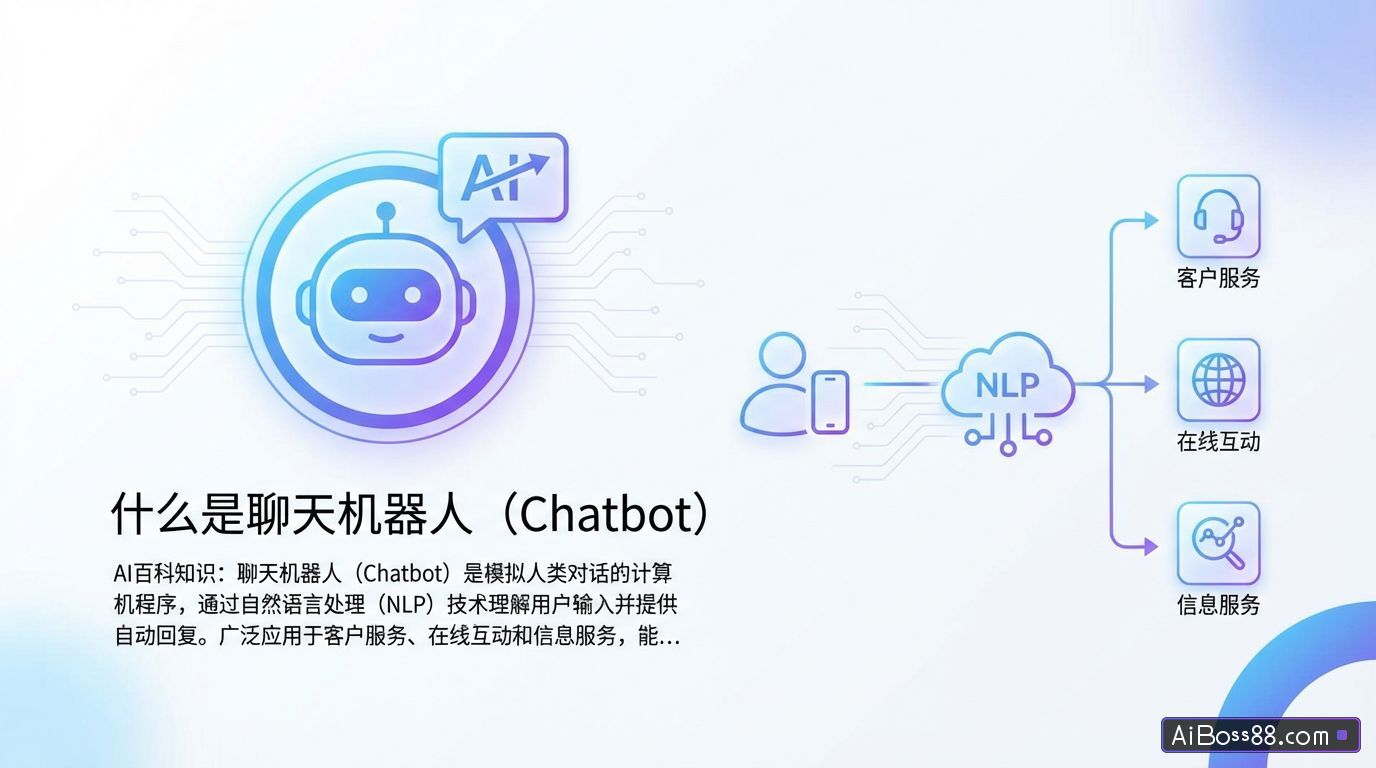
Chatbots are gradually becoming indispensable companions in our daily lives. By simulating human conversational abilities, they provide us with a completely new interactive experience. Whether it's...fastTo obtain information, to enjoy personalized services, orSimpleChatbots can conduct daily communication in a way that allows them to...High efficiencyA convenient way to meet our needs. WithartificialintelligentWith the continuous advancement of technology,intelligentThe functions of assistants are constantly expanding, changing the way we interact with technology and opening a new chapter in human-computer collaboration.
What is a chatbot?
A chatbot is a computer program that simulates human conversation.Natural Language Processing(NLP) technology understands user input and providesautomaticReply. Widely used in customer service, online interaction, and information services, providing 24-hour support.fastResponse, reducing enterprise costs and enhancing user experience. Modern chatbots often integrate...Machine LearningThis improves the accuracy and naturalness of the dialogue.
How chatbots work
Chatbots rely on advancedNatural Language ProcessingTechnology is used to parse and understand users' text or voice input, grasping users' specific needs through accurate intent recognition and entity extraction. By maintaining the context of the dialogue, the coherence and relevance of communication are ensured, while also leveraging…Machine LearningAlgorithms continuously learn from interactions, improving the accuracy and personalization of their responses. Chatbots expand their functionality by integrating with various external systems and APIs, providing more comprehensive and in-depth services. They can also self-optimize based on user behavior and feedback, achieving a more natural and human-like communication experience. With the continuous advancement of technology, chatbots are becoming increasingly...intelligentIt can handle more complex queries and provide support in a variety of scenarios.High efficiencyConvenient services.
Main applications of chatbots
The main applications of chatbots include customer service, online shopping assistance, educational tutoring, health consultation, personal assistance, and entertainment interaction. Chatbots are capable of...automaticIt can solve diverse problems such as customer consultation, information retrieval, scheduling, and educational assistance, thereby improving efficiency and user experience.
- manufacturing:automaticProduction lines, such as automobile manufacturing and electronic product assembly.
- Medical surgerySurgical robots can perform precise, minimally invasive surgeries, reducing patient recovery time.
- Logistics and warehousingHandling, sorting, and packaging goods in a warehouse.automaticchange.
- agriculture:automaticCultivation, harvesting, and crop monitoring.
- Home servicesCleaning robots, lawn mowing robots, and home assistant robots.
- Disaster ResponseSearch and rescue missions in dangerous environments, such as fire and earthquake sites.
- Military and SecurityMilitary applications include reconnaissance, mine clearance, and border patrol.
- Deep Sea and Space ExplorationUnderwater robots are used for deep-sea exploration, while space robots are used for space exploration and maintenance missions.
- Entertainment and EducationInteractive and educational robots in theme parks are used to assist in teaching.
- service industryFood ordering and delivery robots in the catering industry, and reception robots in hotels.
- Personal AssistanceAssistive robots that help people with disabilities or the elderly with their daily lives.
- Environmental monitoringUsed for monitoring and cleaning up the environment, such as ocean plastic waste collection robots.
Challenges of Chatbots
The challenges facing chatbots include understanding the complexities of natural language, providing accurate contextual responses, handling multiple languages and dialects, ensuring user privacy and data security, and continuously adapting to changing user needs and preferences. These mainly include the following aspects:
- Natural Language UnderstandingUnderstanding a user’s natural language input correctly is a major challenge because languages have many dialects, slang, and expressions.
- Context ManagementMaintaining the coherence of the dialogue, understanding its history and context, and providing appropriate responses.
- Multilingual supportFor multilingual user groups, chatbots need to be able to understand and respond to different languages.
- Personalized experienceTo provide users with a personalized interactive experience, chatbots need to be able to recognize and remember user preferences.
- Handling complex queriesFor complex or ambiguous queries, chatbots may struggle to provide accurate or useful answers.
- User Intent RecognitionAccurately identifying a user's true intent can be difficult, especially when the user's input is ambiguous.
- Security and privacyProtecting user data and privacy is key; chatbots need to ensure that all interactions are secure.
- Technology IntegrationIntegrate chatbots with other systems (such as CRM and databases) to provide a more comprehensive service.
- User acceptanceSome users may be skeptical about interacting with robots, and increasing user acceptance is a challenge.
- Legal and ethical issuesAs chatbots are applied in more fields, related legal and ethical issues are becoming increasingly prominent.
- Scalability and maintenanceAs the user base grows, chatbots need to be able to scale to handle higher loads while maintaining performance.
- Avoid prejudice and discriminationTo ensure that chatbot responses are fair and unbiased, and that they do not discriminate based on algorithms.
- Error handlingWhen a chatbot cannot understand user input or encounters an error, it needs an appropriate error handling mechanism.
- Continuous learning and adaptationChatbots need to continuously learn and adapt to new vocabulary, trends, and user behaviors.
The Future Prospects of Chatbots
The future prospects of chatbots suggest that they will be developed through more advanced technologies.Natural Language ProcessingPersonalized servicesMultimodalInteraction and EmotionintelligentTechnology has become moreintelligentUser-friendly. With continuous technological advancements, chatbots will be able to integrate across platforms, provide professional services, and achieve higher standards in security, privacy protection, compliance, and ethics, ultimately becoming an important auxiliary tool in daily life and work.