What is Domain Adaptation? - AI Encyclopedia
Domain adaptation is a method in transfer learning that aims to transfer a model from one domain (source domain) to another different domain (target domain), improving the model's performance in the target domain. Mainly...
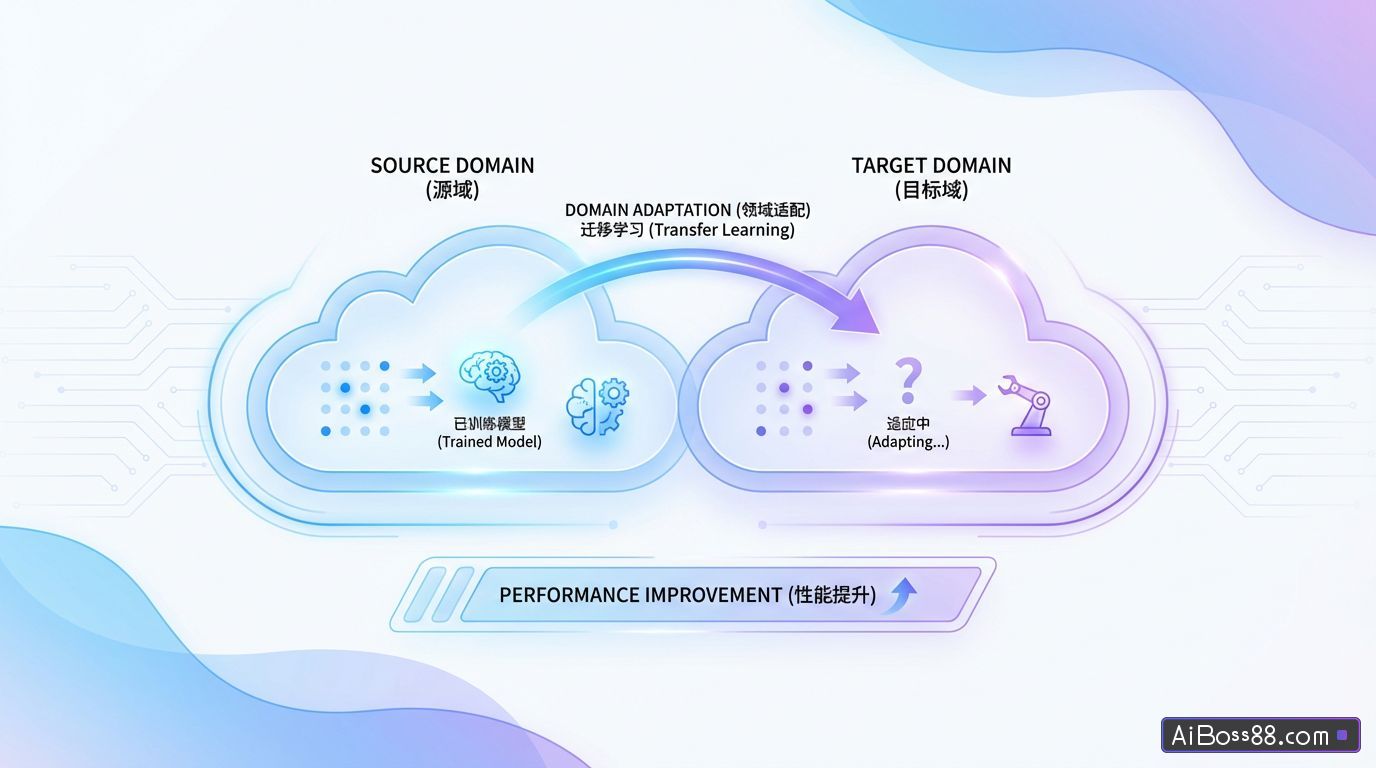
Domain adaptation, as an important branch of transfer learning, involves...intelligentDomain adaptation leverages knowledge from the source domain to optimize the performance of the target domain model, even when target domain data is scarce or incompletely labeled. This article delves into the basic concepts, key technologies, challenges, and future development directions of domain adaptation, aiming to provide readers with a comprehensive perspective on its core value and application prospects. With continuous technological advancements, domain adaptation is expected to become a crucial link connecting data silos across different domains and driving...artificialintelligentAn important bridge for the widespread application.
What is domain adaptation?
Domain adaptation is a method in transfer learning that aims to transfer a model from one domain (source domain) to another different domain (target domain), improving the model's performance in the target domain. It primarily addresses the problem of inconsistent data distributions between the source and target domains by adjusting the model to better adapt to the data characteristics of the target domain. This involves reducing the distributional differences between the source and target domains so that the model can generalize to new, unseen data. Domain adaptation is widely used in image recognition, text processing, and other fields.Machine LearningIn the midst of a mission.
How Domain Adaptation Works
Domain adaptation works by identifying and reducing the distributional differences between the source domain (rich in data and labeled) and the target domain (less data and possibly unlabeled). It uses information from the source domain to improve the generalization ability of the model in the target domain, thereby enabling the model to better adapt to and perform tasks in the target domain, even if the data distribution in the target domain is different from that in the source domain.
Main applications of domain adaptation
Domain adaptation is primarily applied in, but is not limited to, the following domains:
- Image recognitionTransferring models between images taken under different lighting, backgrounds, or devices improves recognition accuracy.
- Medical image analysisThis involves adapting medical image models obtained from one hospital or device to another to maintain diagnostic consistency.
- Natural Language Processing: Adapt to text data from different domains or language styles to improve the performance of tasks such as sentiment analysis and text classification.
- automaticdriveAdapting data collected from simulated environments or a specific city to real-world or different city driving conditions improves performance.automaticRobustness of the driving system.
- recommendsystemTo adapt to the preferences of different user groups or at different times, providing a more personalized experience.recommend.
- Speech recognitionIt adapts to speech data with different accents, dialects, or noisy environments, improving the generalization ability of speech recognition systems.
- Legal and financial document analysisAdapting models from one legal or financial document set to another improves the accuracy of information extraction and classification.
- Health monitoringAdapt to health monitoring data from different population groups to improve disease prediction and health management applications.
- Cross-language text miningAdapting a text mining model from one language to other languages enables cross-language information retrieval and analysis.
- BioinformaticsIt adapts to data from different biological samples or experimental conditions, improving the accuracy of gene expression analysis and disease biomarker identification.
Challenges of Domain Adaptation
Domain adaptation faces several challenges in practice, including:
- Distributional differencesDifferences in data distribution between the source and target domains can lead to a decrease in model performance in the target domain. These differences may involve the feature space, label distribution, or joint distribution of the data.
- Tag missingIn many domain adaptation scenarios, the data in the target domain may not be labeled, making it impossible to directly apply traditional supervised learning methods.
- Negative transfer problemIf the data differences between the source and target domains are too large, direct migration may lead to a decrease in model performance; this phenomenon is called negative migration.
- Insufficient domain similarityDomain adaptation may be difficult to achieve if the similarity between the source and target domains is insufficient to support effective knowledge transfer.
- Data imbalanceThe target domain data may be class imbalanced, with some classes having very few samples, which can affect the model's generalization ability.
- Computing resource limitationsDomain adaptation may require significant computational resources to train and tune models, especially when dealing with large-scale datasets.
- Model selection and hyperparameter tuningChoosing the right model architecture and hyperparameters is crucial for successful domain adaptation, but this process is often complex and time-consuming.
- Lack of domain theoryIn some cases, a lack of in-depth understanding of source and target domain data can hinder the design of effective domain adaptation strategies.
- Dynamic environmental adaptationIn a constantly changing environment, domain-adaptive models need to be able to adapt to new data distributions, requiring the models to have the ability to learn online and be continuously updated.
- Evaluation and verificationEvaluating the performance of domain-adaptive models can be challenging because the target domain data may be incomplete or biased.
The Development Prospects of Domain Adaptation
Domain adaptation, as a core component of transfer learning, has broad prospects and great potential.Machine LearningWith the increasing demand for applications in diverse scenarios, the research and application of domain adaptation technologies will continue to deepen. Future research may focus on developing more...High efficiencyandautomaticDomain adaptation algorithms reduce reliance on large amounts of labeled data and improve the model's adaptability to dynamically changing environments. Domain adaptation is...MultimodalDomain adaptation also shows great potential in learning, cross-domain knowledge integration, and enhancing model interpretability. With increasingly abundant computing resources and accelerated algorithmic innovation, domain adaptation is expected to play a significant role in medical diagnosis,automaticDriving, Personalizationrecommend,intelligentBreakthroughs have been achieved in multiple fields, including education, to promoteartificialintelligentThe widespread application and in-depth development of technology.