What is Causal Reasoning? - AI Encyclopedia
Causal reasoning is an analytical method that aims to explore causal relationships between events. It goes beyond simple correlation analysis, attempting to determine whether one event causes another to occur. In science...
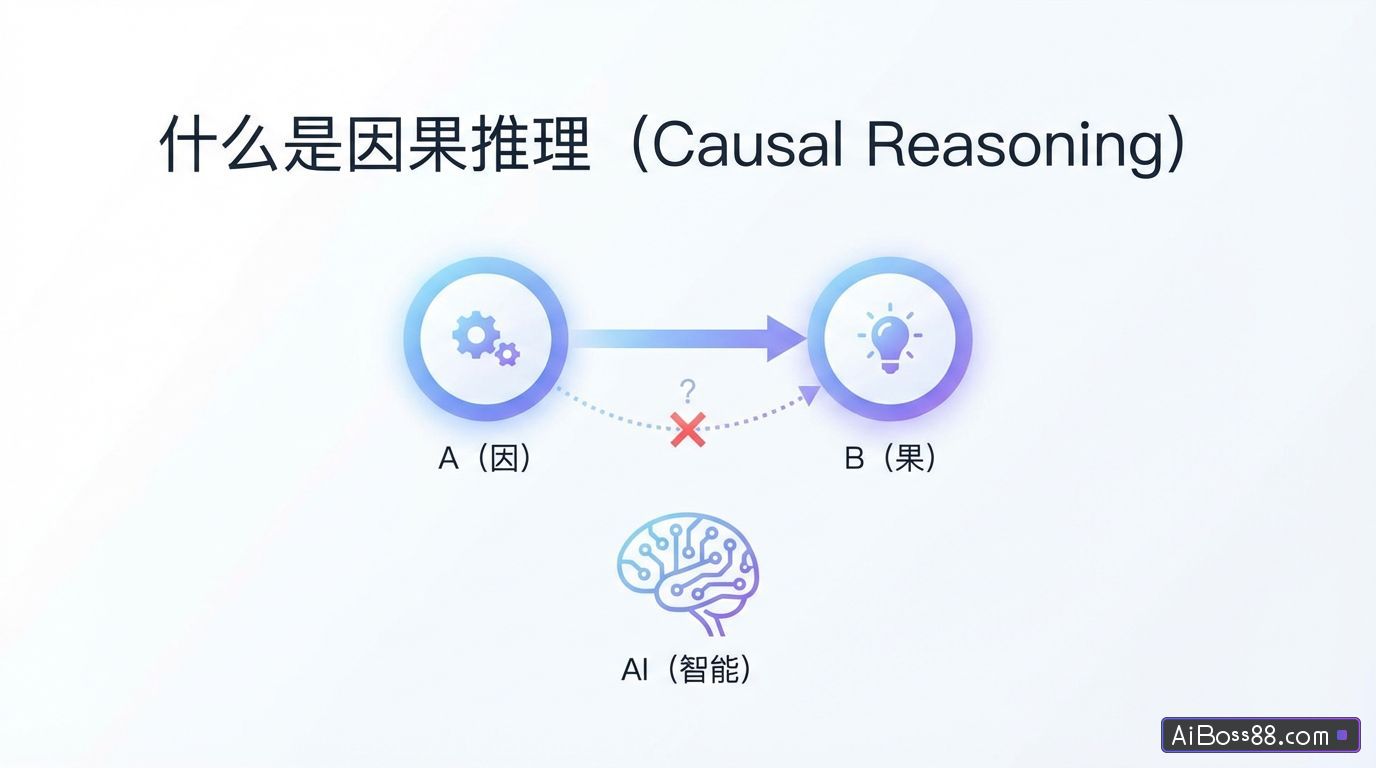
Causal reasoning, as a key to understanding how the world works, guides us to a deeper understanding of the intrinsic connections between events. In the real world, where numerous variables intertwine, it helps us identify which factors are the true drivers of outcomes. This reasoning method transcends superficial correlations, pointing to a deeper logical chain between cause and effect. With the continuous advancement of data analysis technology, causal reasoning is increasingly widely applied in various fields, becoming an important tool for promoting knowledge development and optimizing decision-making.
What is causal reasoning?
Causal reasoning is an analytical method that aims to explore causal relationships between events. It transcends...SimpleCorrelation analysis attempts to determine whether one event leads to another. In scientific research and data analysis, causal reasoning helps us understand direct relationships between variables, predict the effects of interventions, and support decision-making. It involves complex statistical models and algorithms, such as latent outcome models and causal graphs, to control for confounding variables and reveal the true causal mechanisms.
How causal reasoning works
Causal reasoning works by inferring causal relationships between variables based on observational data or experimental results, using statistical and mathematical models. This typically involves constructing causal diagrams or using potential outcome models to represent the interactions between variables. These models help researchers identify and control for potential confounding factors, thus clearly revealing how a particular intervention affects the outcome. For example, through randomized controlled trials or precise statistical adjustments, researchers can estimate the specific effects of a drug on the treatment of a disease.
In practical applications, causal inference also needs to consider the quality and completeness of the data. Researchers must ensure that the data used reasonably represents the research population and that the data collection process did not introduce bias. The effectiveness of causal inference also depends on correct model assumptions and reasonable inference methods.Machine LearningandartificialintelligentWith the development of technology, the methods of causal reasoning are also constantly improving, enhancing the accuracy and reliability of extracting causal relationships from complex data.
Main applications of causal reasoning
Causal reasoning has wide applications in many fields. Here are some of the main application scenarios:
- Medical researchIn drug efficacy evaluation, disease risk factor analysis, and treatment selection, causal reasoning helps determine the causal relationship between treatment and outcome.
- EpidemiologyIt is used to analyze the causal pathways of disease transmission and the effectiveness of public health interventions in controlling epidemics.
- economicsCausal reasoning provides a means of quantification and prediction when assessing the impact of economic policies, market interventions, or social welfare programs.
- Social SciencesTo study the causal mechanisms behind social phenomena such as education, employment, and social behavior, and to guide policy-making and social planning.
- artificialintelligentandMachine LearningIn the process of algorithmic decision-making, causal reasoning helps to understand the logic behind the model's predictions, thereby improving the interpretability and fairness of the model.
- recommendsystem: By understanding the causal relationships behind user behavior and preferences, optimizerecommendAlgorithms enhance personalizationrecommendThe accuracy.
- Environmental ScienceTo assess the impact of human activities on environmental change, such as the role of industrial emissions in climate change.
- legal fieldIn legal case analysis, causal reasoning is used to determine liability and calculate damages.
- MarketingAnalyze the impact of marketing campaigns on sales, evaluate the effectiveness of advertising, and understand the motivations behind consumer behavior.
- Educational ResearchTo study the impact of teaching methods and curriculum design on student learning outcomes and improve educational strategies.
Challenges of causal reasoning
Causal reasoning faces several challenges in practical applications, including:
- Confounding factorsConfounding variables can affect both cause and effect simultaneously, leading to erroneous causal inferences. Correctly identifying and controlling these confounding factors is a major challenge in causal reasoning.
- Reverse causalitySometimes it is difficult to distinguish the direction of causality, that is, which variable is the cause and which is the effect, especially in observational data.
- Missing variablesFailure to consider all relevant variables in the analysis may lead to omission bias, which can affect the accuracy of causal relationships.
- Data qualityIncomplete data, measurement errors, or biases can directly affect the validity of causal reasoning.
- Sample selection biasIf the research sample is not representative of the population, then causal inferences drawn from the sample data may not apply to the entire population.
- External effectiveness of interventionCausal relationships derived in a specific environment may not apply to other environments or conditions, thus limiting the universality of causal conclusions.
- Time sequence problemDetermining the temporal order of variables is crucial for correctly inferring causal relationships, but in some cases, it can be difficult to determine.
- Complex dynamic systemsIn complex systems involving multiple interacting factors, causal relationships can be very elusive.
- Model setting errorIn constructing causal models, incorrect assumptions or model specifications can lead to misleading conclusions.
- Ethical and practical limitationsSome causal relationship studies may be difficult to verify through randomized controlled trials due to ethical or practical considerations.
The Prospects for the Development of Causal Reasoning
Causal reasoning has broad prospects for development, especially with the advancement of big data and...artificialintelligentTechnological advancements, inautomaticFeature selection,Deep learningInterpretability and its application in complex system modeling will continue to deepen. In the future, causal reasoning is expected to improve the efficiency of decision support systems through more accurate algorithms and more complex datasets, driving personalized medicine, precision marketing, and...intelligentInnovation in areas such as policymaking. Interdisciplinary collaboration will promote the refinement of causal reasoning theories and the innovation of their practices, enabling them to play a greater role in solving real-world problems.