What is Speech Recognition? - AI Encyclopedia
Speech recognition (ASR), also known as automatic speech recognition, is a high-tech process that converts human speech into text or commands. Through steps such as feature extraction, pattern matching, and model training, it enables machines to...
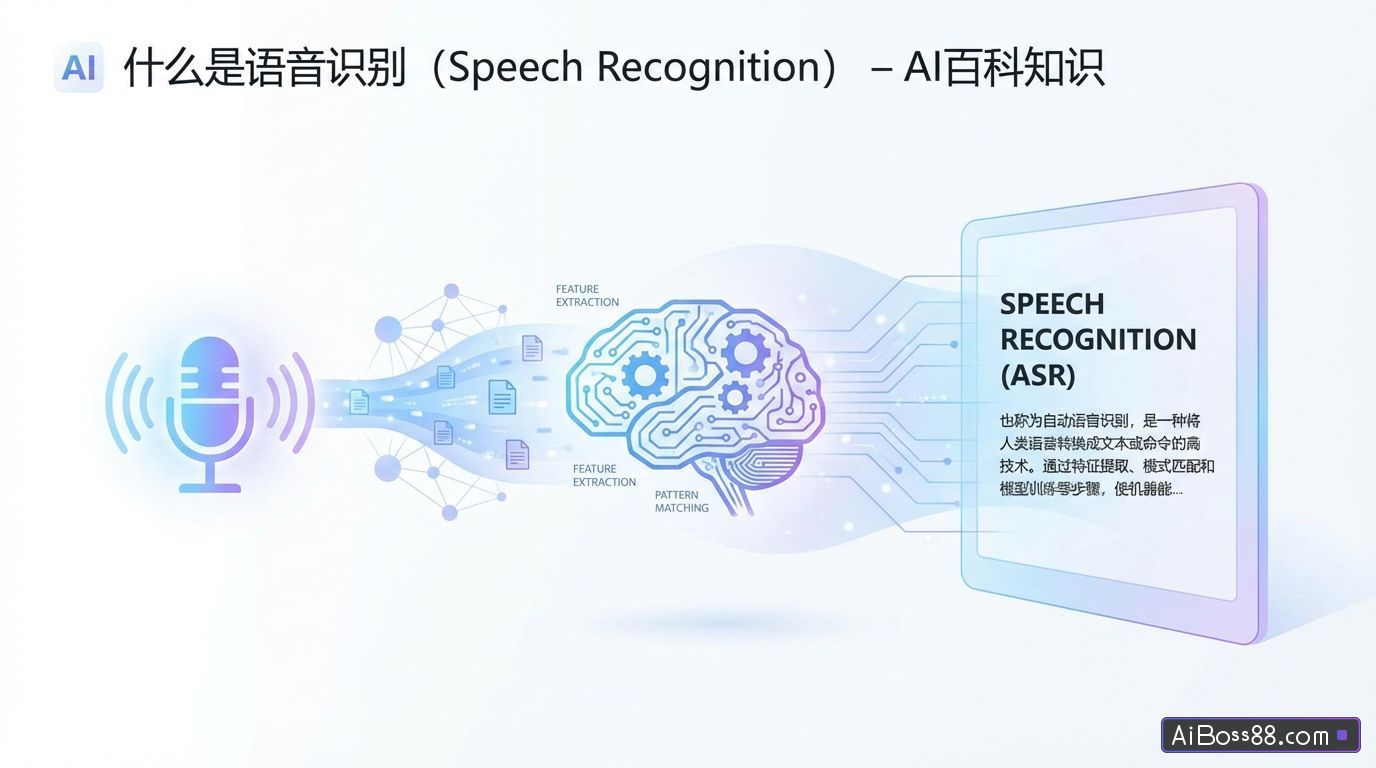
Speech recognition acts as a bridge, connecting the human world with machines.intelligentThis is not merely a technological innovation, but a revolutionary leap forward in human-computer interaction. Speech recognition technology enables machines to "hear" and "understand" human language, converting speech signals into actionable text or commands, greatly expanding the boundaries of computer applications. FromSimpleFrom simple command execution to complex dialogue understanding, this technology is gradually permeating all aspects of our lives. Whether at home, at work, or for entertainment, speech recognition is simplifying operations, improving efficiency, and enriching experiences in its unique way. With in-depth research and technological maturity, speech recognition is ushering in a completely new era.intelligentOur times fill us with anticipation for the infinite possibilities of the future.
What is speech recognition?
Speech recognition is also known asautomaticAutomatic speech recognition (ASR) is a high-tech method that converts human speech into text or commands. Through steps such as feature extraction, pattern matching, and model training, it enables machines to recognize and understand speech signals. It is widely used in…intelligentAssistants, voice control systems, and voice input systems have greatly enhanced the naturalness and convenience of human-computer interaction. With...Deep learningWith the development of technology, the accuracy and application scope of speech recognition have been continuously expanding, becoming...artificialintelligentAn important branch of the field.
How speech recognition works
The workflow of speech recognition typically consists of two main stages: building an acoustic model and applying a language model. In the acoustic modeling stage, the system analyzes speech signals to extract key features such as phonemes, frequencies, and rhythms. These features are then converted into a series of numerical representations used to train the recognition system. The acoustic model uses this data to learn the relationships between different speech patterns, thereby enabling it to recognize specific speech commands or words.
In the language modeling stage, the system utilizes statistical methods and algorithms to predict and understand the probability and meaning of word sequences. This includes processing grammatical rules, word order, and contextual relationships. The language model helps the system make more accurate judgments during recognition, especially in the presence of homophones or semantic ambiguity. By combining acoustic and language models, the speech recognition system can convert heard speech into text output, enabling effective human-computer communication.
Main applications of speech recognition
Speech recognition technology because of itsHigh efficiencyIts convenient interaction method has been widely used in many fields:
- Virtual AssistantExamples include Apple's Siri, Amazon's Alexa, and Google Assistant, which allow users to use voice commands to query information, manage schedules, play music, and more.
- In-vehicle systemThe voice recognition system integrated into the car allows the driver to use voice commands for navigation, making phone calls, adjusting volume, etc., improving driving safety.
- intelligentHome:intelligentHome appliances such asintelligentSpeakers andintelligentLight bulbs, controlled via voice commands for various home functions.intelligentDevices that enable homeautomaticchange.
- Medical recordsDoctors and nurses can use voice recognition technology to dictate medical records and prescriptions, and the system will...automaticConvert to text to improve work efficiency.
- Customer ServiceIn call centers, voice recognition technology canautomaticProcess customer inquiries and provide them through an interactive voice response (IVR) system.fastServe.
- Voice input method:existintelligentOn mobile phones and computers, users can input text via voice, which provides great convenience when they are mobile or have limited hands.
- Education and trainingSpeech recognition technology is used in language learning and hearing impairment assistance to help students improve pronunciation accuracy and language comprehension.
- Security and monitoringIn the security field, voice recognition can be used for identity verification, monitoring and alarm systems, and to improve security.
- legal and financial industriesSpeech recognition technology is used to record meeting content, transaction information, and to perform real-time translation and transcription.
- Entertainment and GamesIn video games and interactive entertainment, voice recognition provides a new way for users to interact, enhancing immersion and interactivity.
Challenges of speech recognition
While speech recognition technology has made significant progress, it still faces some challenges:
- Accent and dialect differencesThe accents and dialects of different regions and individuals pose a challenge to speech recognition systems because they may differ significantly from the speech patterns in the training data.
- noise interferenceBackground noise, such as traffic noise, loud voices, or wind noise, may affect the clarity of the speech signal and reduce the recognition accuracy.
- Speaker's speaking speed and tone:fastSlow speaking speed, different intonation, pauses, and non-verbal sounds (such as laughter and sighs) can all affect the performance of a speech recognition system.
- Vocabulary and Language ModelBuilding accurate and effective language models for specific domains or technical terms is a challenge because these may not be included in standard training data.
- Multi-speaker environmentIn an environment where multiple people are speaking simultaneously, distinguishing and identifying the voices of different speakers is a technical challenge.
- Real-time processing requirementsIn certain application scenarios, such as real-time translation or interactive systems, high demands are placed on the real-time processing capabilities of speech recognition.
- Privacy and security issuesVoice recognition systems often need to process sensitive data, so how to protect user privacy and data security is an important issue.
- Hardware limitationsOn some devices, such as mobile devices or embedded systems, hardware resources may limit the performance of a speech recognition system.
- User adaptabilityUsers may need to adapt to the interaction methods of the speech recognition system, including learning how to pronounce clearly and accurately to improve the recognition rate.
- Multilingual supportDeveloping a system that can accurately identify and process multiple languages is a challenge in multilingual environments.
The Development Prospects of Speech Recognition
Speech recognition technology asartificialintelligentA key branch of the field, with broad development prospects. WithDeep learning,Neural NetworksWith continuous breakthroughs in advanced technologies, as well as improvements in computing power and the abundance of big data resources, the accuracy and application scope of speech recognition will continue to expand. In the future, we can foresee speech recognition technology becoming more deeply integrated into daily life and professional fields, such as...intelligentApplications such as home automation, medical diagnosis, educational assistance, and real-time translation provide users with a more natural and convenient human-computer interaction experience. With advancements in privacy protection and security technologies, public acceptance and trust in voice recognition technology will increase, driving this field towards deeper and broader applications.