What is a Knowledge Graph? - AI Encyclopedia
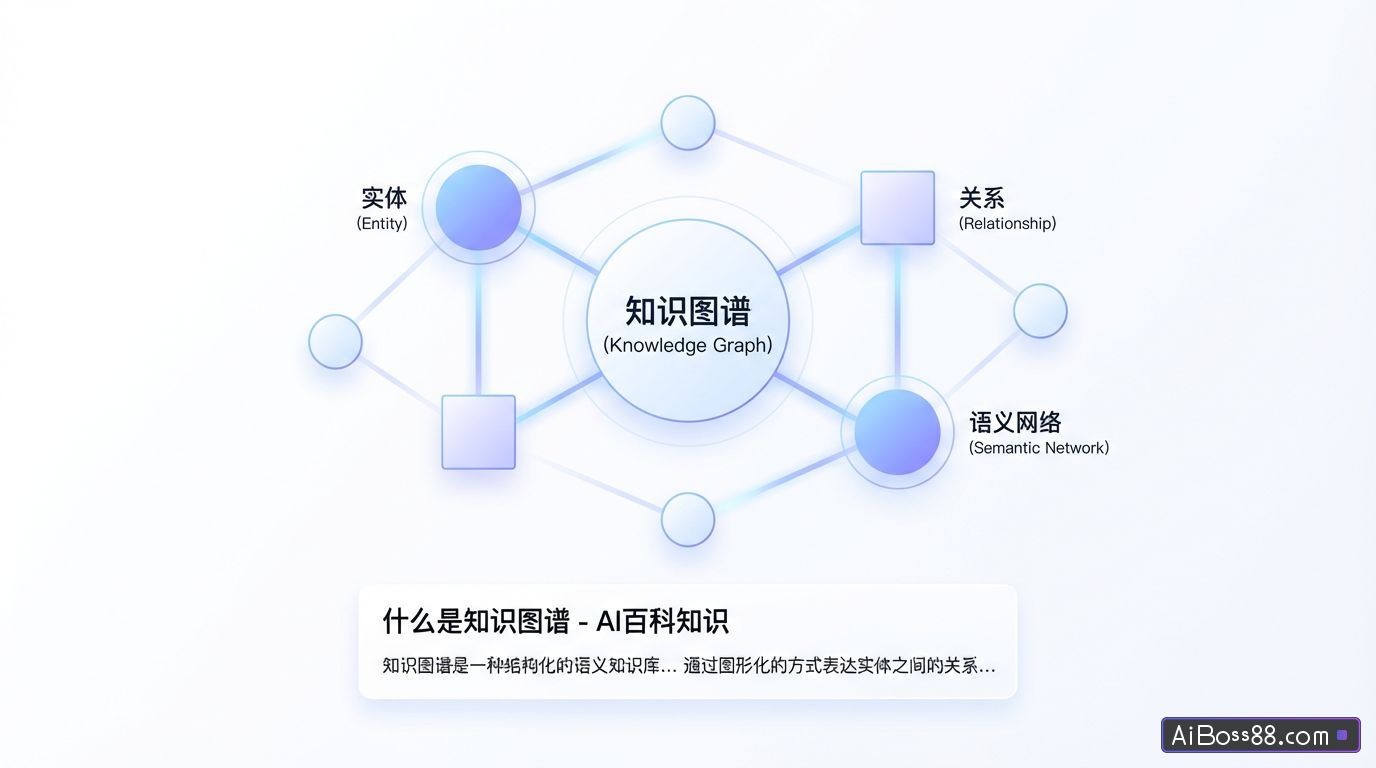
A knowledge graph is a structured semantic knowledge base that graphically represents the relationships between entities. It consists of nodes (representing entities) and edges (representing the relationships between entities), and can store and process...
Knowledge graph asartificialintelligentA key technology in this field, by transforming massive amounts of information into structured semantic networks, greatly enhances machines' ability to understand and process data. This has driven...intelligentSearch andrecommendThe system's innovation has demonstrated enormous application potential in multiple industries, including finance, healthcare, and education. With continuous technological advancements, knowledge graphs are expected to further facilitate data-driven decision-making and...automaticThe development of digital services provides a foundation for buildingintelligentIt provides a solid foundation for a modern society.
What is a knowledge graph?
A knowledge graph is a structured semantic knowledge base that graphically represents the relationships between entities. It consists of nodes (representing entities) and edges (representing relationships between entities) and can store and process large amounts of complex data. Knowledge graphs make information easier for computers to understand and process, and are widely used in search engines, etc.recommendsystem,intelligentIn fields such as question and answer, improve the accuracy and efficiency of information retrieval.
How knowledge graphs work
Knowledge graphs utilize information extraction techniques.automaticIdentifying entities in text and the relationships between them, and storing this information as triples, constructs a semantic network. Semantic networks enable computers to understand and process large amounts of complex data, thereby enabling them to interpret user queries.fastresponse.
Knowledge graphs can locate and return relevant knowledge content based on stored entity relationships and attribute information. They can also discover new information and relationships through reasoning, expanding the content of the knowledge base and improving the accuracy and efficiency of information retrieval.
Main applications of knowledge graphs
The main application areas of knowledge graphs include:
- intelligentsearchBy understanding the semantics of queries, we can provide more accurate and relevant search results, thus enhancing the user experience.
- recommendsystemAnalyze user behavior and preferences to provide personalized content or products.recommend.
- intelligentQuestion and Answer SystemIt understands natural language problems and provides accurate answers based on a knowledge base.
- Personalized medicineIntegrating medical data and research to provide patients with customized treatment plans.
- Financial risk controlAnalyze transaction patterns and customer behavior to identify potential fraudulent activities.
- educate: Construct educational knowledge graphs to provide personalized learning paths and resources.
- supply chain managementOptimize inventory management and logistics to improve supply chain efficiency and responsiveness.
- Customer Service:automaticStreamline customer support processes and providefastAccurate service.
- Content categories and tags:automaticAssign tags to content to facilitate retrieval and management.
- Social network analysisAnalyze social relationships and influence for marketing and brand analysis.
Challenges of Knowledge Graphs
Knowledge graphs face several challenges in their construction and application, including:
- Data qualityThe accuracy and reliability of a knowledge graph depend on the quality of its input data. Inaccurate or incomplete data will negatively impact the performance of the knowledge graph.
- Data scaleAs the amount of data increases, effectively storing, managing, and querying large-scale knowledge graphs becomes a challenge.
- Information Extraction:automaticExtracting entities and relationships from unstructured data remains a technical challenge, especially when dealing with complex text and multilingual content.
- Entity disambiguationDistinguishing between entities with the same name or similar names in a knowledge graph is a challenge and requires accurate disambiguation algorithms.
- Knowledge IntegrationIntegrating knowledge from different sources into a unified knowledge graph requires addressing the issues of entity alignment and conflict resolution.
- Dynamic updatesKnowledge graphs need to be able to adapt to constantly changing information and be updated in real time to reflect it.up to dateThe data.
- Privacy and securityWhen building and using knowledge graphs, legal requirements for personal privacy and data protection need to be considered.
- User Intent Understanding:existintelligentIn question-and-answer and search applications, accurately understanding a user's query intent and providing relevant answers is a challenge.
- Multilingual supportThe construction of cross-language knowledge graphs requires addressing language differences and translation issues.
- ExplainabilityImproving the interpretability of knowledge graphs, enabling users to understand the basis for the answers they provide, is key to enhancing user trust.
- Technological diversityThe construction and application of knowledge graphs involve a variety of technologies, includingNatural Language Processing,Machine LearningGraph databases and similar databases require interdisciplinary knowledge and skills.
- Resource constraintsBuilding and maintaining knowledge graphs requires significant computing resources and expertise, which can be an obstacle for organizations with limited resources.
The Development Prospects of Knowledge Graphs
Knowledge graphs have broad development prospects, and withartificialintelligentBig data andNatural Language ProcessingWith continuous technological advancements, it is expected to see deeper applications in multiple fields, such as improving...intelligentSearch accuracy and rich personalizationrecommendThe system will be improved, customer service experience optimized, precision medicine promoted in the healthcare field advanced, and real-time monitoring of financial risk control strengthened. The research and application of knowledge graphs will also drive development in data governance, privacy protection, and interdisciplinary integration, contributing to the construction of a more robust and efficient data management system.intelligentIt provides strong support for the interconnected digital world.