What is Privacy-Preserving Federated Learning? - AI Encyclopedia
Federated learning is a distributed machine learning approach that allows multiple clients to collaboratively train models while maintaining data locality and avoiding direct sharing of raw data. Privacy-preserving federated learning...
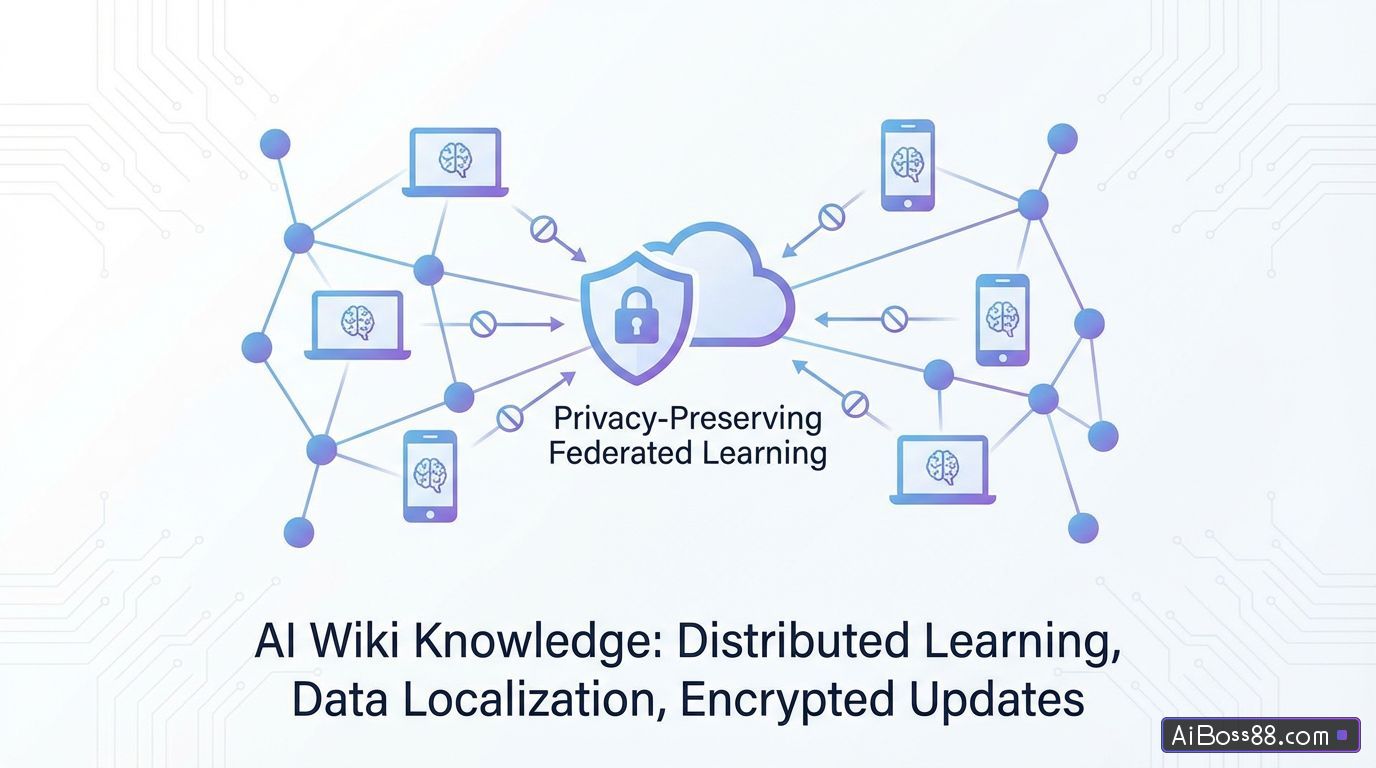
Privacy-preserving federated learning is a key technology for ensuring data security during distributed learning processes. With increasingly stringent data privacy regulations and growing user awareness of personal information protection, the challenge lies in how to achieve data security without disclosing personal data.High efficiencyUtilization has become an urgent problem to be solved. Federated learning, as an emerging technology...Machine LearningThis paradigm allows multiple participants to collaboratively train a shared model while maintaining data locality, offering a new approach to privacy protection. This paper will explore the mechanisms of privacy protection in federated learning, the challenges it faces, and its future development directions.
What is privacy protection in federated learning?
Federated learning is a distributed learning methodMachine LearningThis method supports collaborative model training across multiple clients while maintaining data locality and avoiding direct sharing of raw data. Privacy-Preserving Federated Learning is achieved by ensuring that no client's local data is exposed during training. This involves using encryption technologies, differential privacy, or trusted execution environments to prevent unauthorized access or leakage of data during transmission or aggregation. The goal of privacy protection is to enable cross-device data utilization and model training without sacrificing data confidentiality, enhancing user trust, and complying with data protection regulations.
How Privacy Protection Works in Federated Learning
The privacy-preserving principle of federated learning relies primarily on localized data processing and encrypted exchange of model parameters. In this learning model, participating devices retain their data locally, sharing only model updates, such as gradients or weights. These updates are encrypted using techniques like homomorphic encryption or secure multi-party computation to ensure they are not eavesdropped on or tampered with during transmission. Furthermore, differential privacy techniques add noise to obscure the impact of individual data points, further reducing the risk of user privacy breaches.
To enhance security, federated learning can also incorporate Trusted Execution Environments (TEEs), a hardware security technology that allows data processing and model training to take place within isolated, secure areas. TEEs ensure that sensitive operations can be performed securely even if the device is infected with malware. Federated learning not only protects data privacy but also enhances the overall security of the model training process, enabling collaborative learning across multiple distributed data sources while adhering to stringent privacy standards.
Key applications of privacy protection in federated learning
Federated learning's privacy-preserving technologies are primarily applied in scenarios requiring a high degree of data privacy protection. Here are some key areas:
- healthcarePrivacy is paramount when processing patient data. Federated learning allows different healthcare institutions to collaboratively train models without sharing sensitive patient data, improving disease diagnosis, treatment planning, and drug discovery.
- Financial ServicesBanks and insurance companies can use federated learning to improve the accuracy of fraud detection systems while ensuring compliance with strict data protection regulations, such as GDPR, and to prevent the disclosure of customer transactions and personal information.
- intelligentequipment:existintelligentIn home and wearable devices, user data privacy is a top priority. Federated learning enables devices to process data locally, sending only learned patterns and updates to the cloud, thus protecting users' lifestyle habits and health information.
- OnlinerecommendsystemE-commerce platforms and social media platforms can collaborate to optimize their systems without sharing user behavior data through federated learning.recommendAlgorithms enhance user experience while protecting user privacy.
- automaticdriving a car:existautomaticIn the development of driving technology, federated learning allows automakers to collaboratively train and improve vehicle navigation and decision-making systems without sharing sensitive data collected by the vehicles, such as location information and driving habits.
- Scientific researchIn genomics and other biomedical research, federated learning supports cross-institutional data collaboration, helping to discover new disease biomarkers and treatments while protecting participants’ genetic information.
Challenges to Privacy Protection in Federated Learning
While federated learning provides an effective data protection mechanism, it still faces some challenges in practical applications:
- Data breach riskAlthough federated learning is designed with mechanisms that do not share the original data, model updates (such as gradients) may contain sensitive information. Attackers could potentially analyze these updates to infer information about the training data, such as membership inference attacks and attribute inference attacks.
- Model safetyIn federated learning, model parameters need to be shared among multiple participants. This can lead to malicious attacks on the model, such as model poisoning attacks, where attackers may attempt to manipulate data to influence the global model's learning.
- Computational and communication overheadTo protect privacy, federated learning typically requires the use of encryption technologies, which can increase the complexity and cost of computation and communication. For example, techniques such as homomorphic encryption and secure multi-party computation can significantly increase processing time.
- System compatibility and scalabilityDifferent devices and platforms may have different computing capabilities and security requirements, making the design of a federated learning system that satisfies both privacy protection and compatibility with multiple environments a challenge. Furthermore, maintaining system efficiency and stability as the number of participating nodes increases is also an issue.
- User trust and complianceUsers may be skeptical of data protection measures in federated learning, especially in data-sensitive industries. Furthermore, compliance with data protection regulations in different jurisdictions, such as the GDPR, requires specific design and adjustments to the federated learning system.
- Data heterogeneityIn federated learning, the data from different participants may vary in quality, format, and distribution, which may lead to bias and unfairness in model training and increase the difficulty of privacy protection.
- The trade-off between privacy protection and model performanceStrengthening privacy protection measures may affect model performance and accuracy. Finding a suitable balance between protecting user privacy and ensuring model effectiveness is a key challenge in federated learning.
Prospects for the Development of Privacy Protection in Federated Learning
Privacy protection in federated learning is moving towards greater...High efficiencyMoving towards security, advancements in technology such as advanced encryption algorithms, differential privacy techniques, and the application of hardware-supported Trusted Execution Environments (TEEs) will significantly improve the performance and security of privacy protection. As regulations tighten data privacy requirements, federated learning frameworks will place greater emphasis on user data compliance and transparency. In the future, we may see more customized privacy protection solutions tailored to the needs of different industries and application scenarios, while ensuring user trust and data security.