What is Retrieval-Augmented Generation (RAG)? - AI Encyclopedia
Retrieval-Augmented Generation (RAG) is a technique that combines Information Retrieval (IR) and Natural Language Generation (NLG). It enhances the generation of natural language by retrieving relevant information from external knowledge bases...
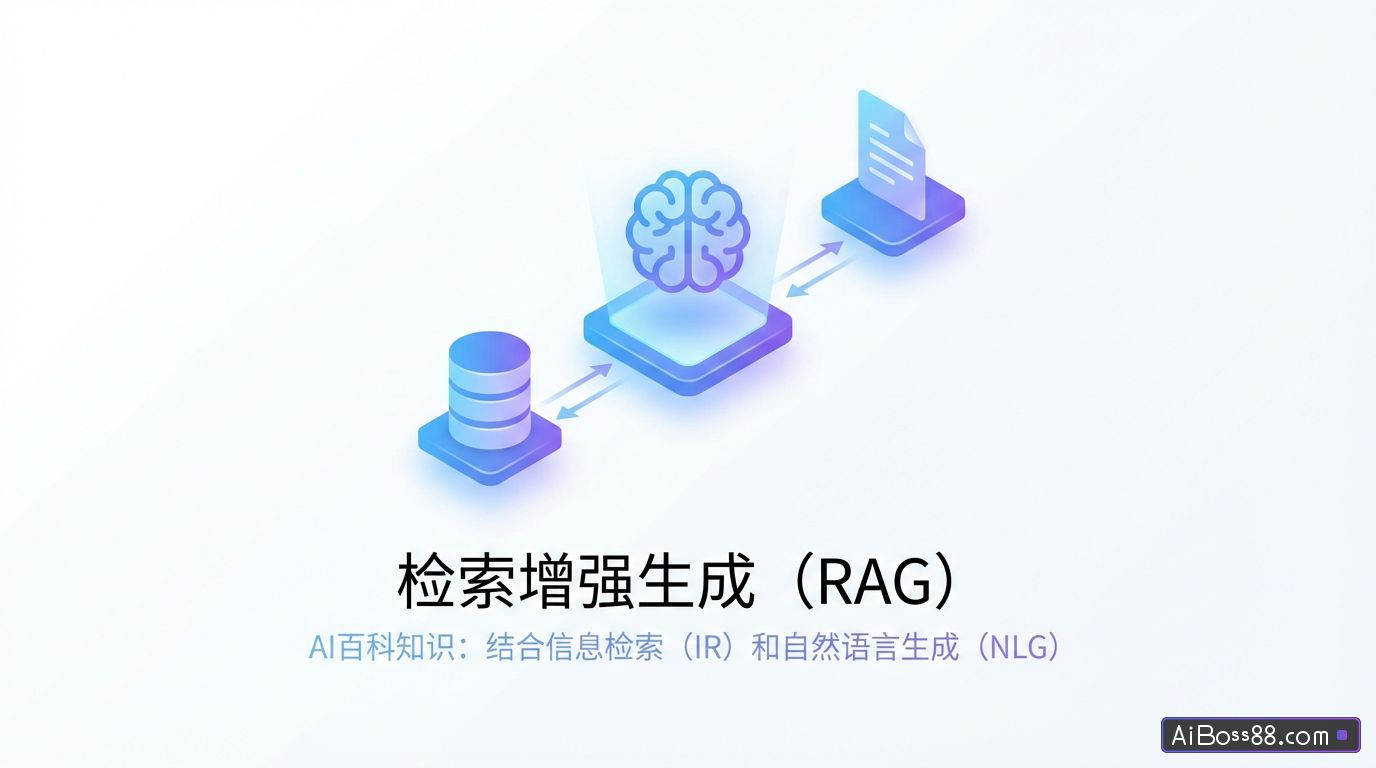
Retrieval-Augmented Generation (RAG) technology, as a cutting-edge technique combining information retrieval and large-scale language models, is used in...artificialintelligentThis field has broad application prospects. The architecture of the RAG system consists of two main modules and a fusion mechanism, which work together to generate accurate and context-sensitive output. It searches large datasets to find the most relevant information fragments to the query. The retrieved information is used as additional context to generate consistent and relevant responses. The system ensures the effective integration of retrieved information during the generation process.
What is search enhancement generation?
Retrieval-Augmented Generation (RAG) is a technique that combines Information Retrieval (IR) and Natural Language Generation (NLG). It enhances the generation of natural language by retrieving relevant information from external knowledge bases.powerfulType language model (LLMThis improves the accuracy, relevance, and timeliness of the generated text.
How Search Enhancement Generation Works
The working principle of Retrieval-Augmented Generation (RAG) can be summarized in three core steps: Retrieval, Augmentation, and Generation. Retrieval, the first step in the RAG process, involves retrieving information relevant to the user's question from a pre-established knowledge base. This step provides useful contextual information and knowledge support for the subsequent generation process. The retrieval phase involves converting the user query into a vector representation and matching it against a vector database to find the most relevant information fragments to the query.
Enhancement involves using retrieved information as contextual input to the generative model to improve its understanding and ability to answer specific questions. This step incorporates external knowledge into the generation process, making the generated text richer, more accurate, and more user-relevant. RAG models enhance user input (or prompts) by adding relevant retrieved data to the context. This step utilizes prompting engineering techniques and...LLMEffective communication allows large language models to generate accurate answers to user queries.
It combines a large language model to generate answers that meet user needs. The generator uses retrieved information as contextual input and combines it with a large language model to generate text content. The generation module is...powerfulGenerative models, such as T5 or BART, will use the retrieved document information to generate the final answer or text.
RAG, through these three steps, retrieves relevant information from an external knowledge base and uses it as input to a large language model, enhancing the model's ability to handle knowledge-intensive tasks. This method fully leverages the advantages of retrieval and generation techniques, ensuring the accuracy and relevance of the responses.up to dateThe specific information enriches the context.
Main applications of search enhancement generation
RAG technology has a wide range of applications, including but not limited to:
- Search enginesRAG technology enhances search engine functionality, providing more accurate and up-to-date summary information. By combining retrieval and generation technologies, RAG can improve the relevance and accuracy of search results.
- Question and Answer SystemThe application of RAG technology in question-answering systems can significantly improve the quality of answers. By retrieving relevant information from databases or documents and generating answers based on this information, RAG can provide more accurate and detailed responses.
- Retail and e-commerceRAG technology can enhance the user experience and provide more relevant and personalized products.recommendBy retrieving and integrating user preferences and product details, RAG can generate more accurate [data/information].recommend.
- Industry and manufacturingRAG technology can helpfastObtain key information, such as factory operation data, to support decision-making, troubleshooting, and organizational innovation.
- healthcareThe application of RAG technology in the healthcare field can provide more accurate and timely information. By retrieving and integrating relevant medical knowledge from external sources, RAG can provide more accurate and context-appropriate responses in medical applications.
- lawIn the legal field, RAG technology can be applied to complex legal scenarios, such as mergers and acquisitions, where intricate legal documents provide context for queries. This can assist legal professionals.fastNavigation involves complex regulatory issues.
- Customer ServiceThe application of RAG technology in customer service can improve service efficiency and quality. By combining retrieval and generation technologies, RAG can provide a more accurate and personalized customer service experience.
- Content creation and newsRAG technology can help creators and news organizations.fastGenerate content and reports. By retrieving information from multiple news sources, RAG can synthesize content from different perspectives to generate comprehensive and objective news reports.
- Education and ResearchIn the fields of education and research, RAG technology can provide students and researchers with customized learning materials and answers.
Challenges of retrieval enhancement generation
The challenges facing RAG technology include:
- Information extraction and vectorizationDuring the indexing phase, the completeness and accuracy of information extraction are crucial. Due to the diversity of document formats, information extraction is challenging, and the quality of data cleaning varies considerably.
- Information retrieval efficiency:howHigh efficiencyRetrieve and utilize information from large-scale knowledge bases.
- Context integration and generationDuring the generation phase, RAG needs to combine user input with retrieved information to generate the final answer. Poor context integration and over-reliance on retrieved information can lead to low-quality generated answers.
- MultimodalData processing:along withMultimodalWith the widespread application of data, RAG systems need to integrate different data sources such as text, images, and videos, but currently, processing...MultimodalData capabilities still need to be improved.
- Knowledge base update issuesThe RAG system relies on the quality and timeliness of an external knowledge base. If the knowledge base is not updated in a timely manner, the answers generated by the system may contain outdated or even incorrect content.
- Computational resources and inference latency:RAG systems require preprocessing and vectorization of user input during inference, which increases inference time and computational cost.
- Information quality assurance: Ensure the quality and accuracy of the retrieved information.
- Algorithm optimizationWe continuously improve algorithms and models to enhance their performance and stability.
The Development Prospect of Search Enhancement Generation
RAG models will continue to incorporate specific knowledge about users, generating more personalized responses. Users will have greater control over the behavior and response methods of the RAG model. RAG will be able to process larger volumes of data and user interactions. Combining RAG with other...AIThe integration of technologies (such as reinforcement learning) is giving rise to more versatile and context-aware systems. RAG models will become increasingly superior in terms of retrieval speed and response time, making them suitable for applications requiring…fastThe application provides a response. Combined with specialized tools, this technology can be better applied and developed, providing...artificialintelligentWe will contribute more to the development of [the region/country].